
How to Fix Ten Months of Almost Together
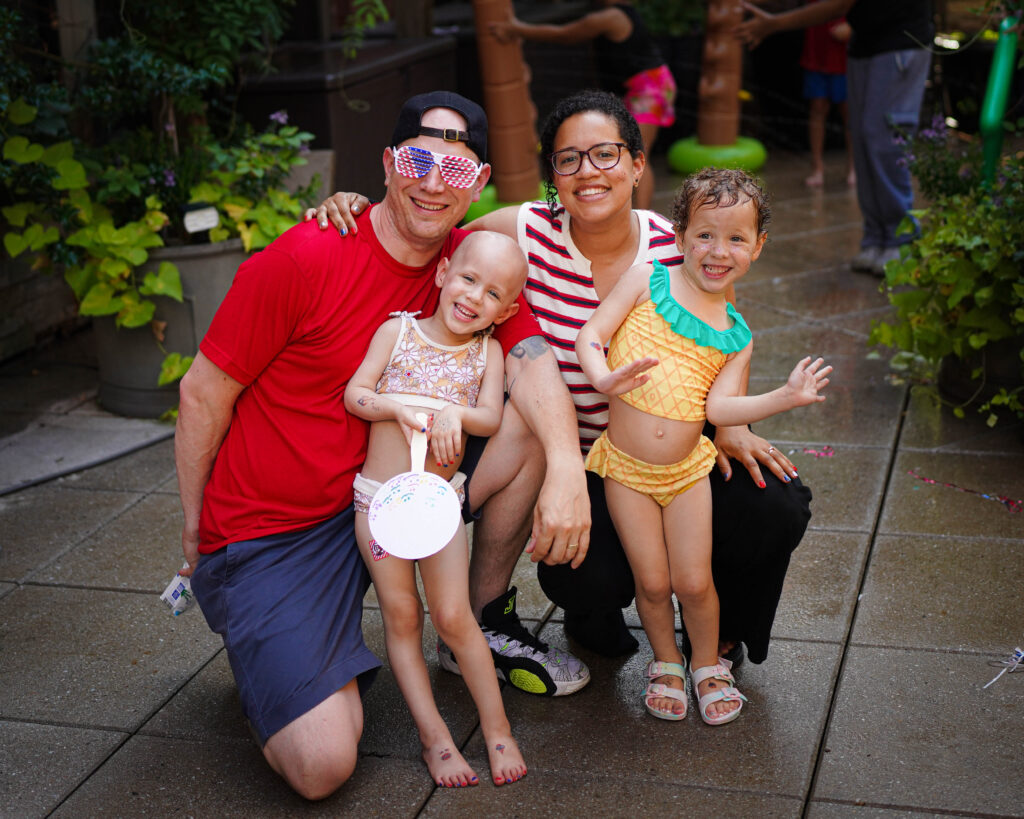
Ronald McDonald House New York gave the King family of Rehoboth, Massachusetts a place to stay together during three-year-old Ruby's six weeks of proton radiation for medulloblastoma, the most common malignant pediatric brain tumor. The House provided lodging, meals, activities, and prepaid daily transportation to and from treatment.
The King Family’s Medical Journey and the House That Kept Them Together
Watch Ruby and Beatrix's Story Here
They ask to sit together. Every time.
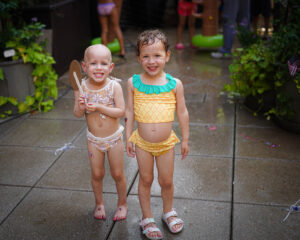
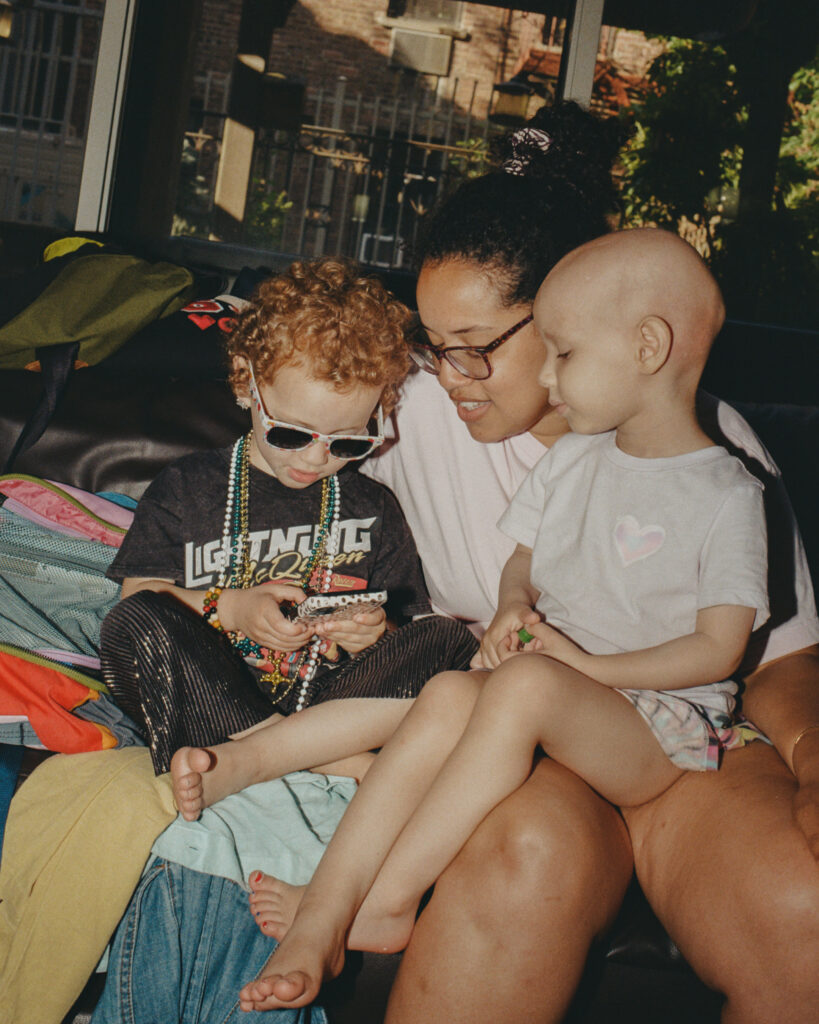
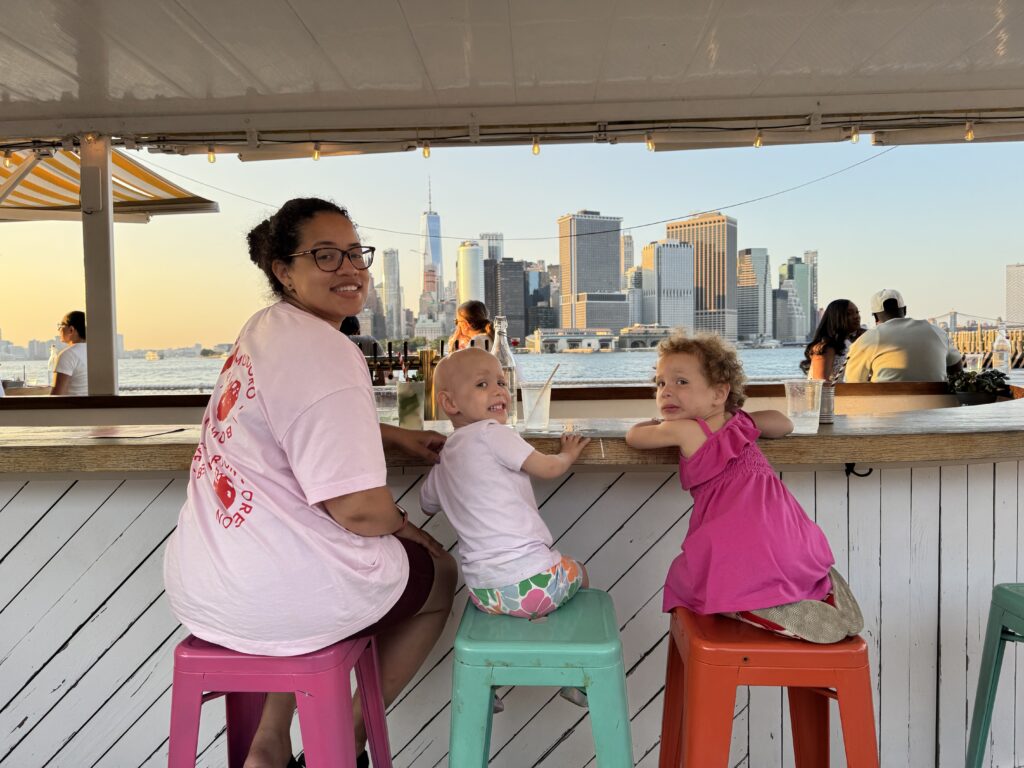
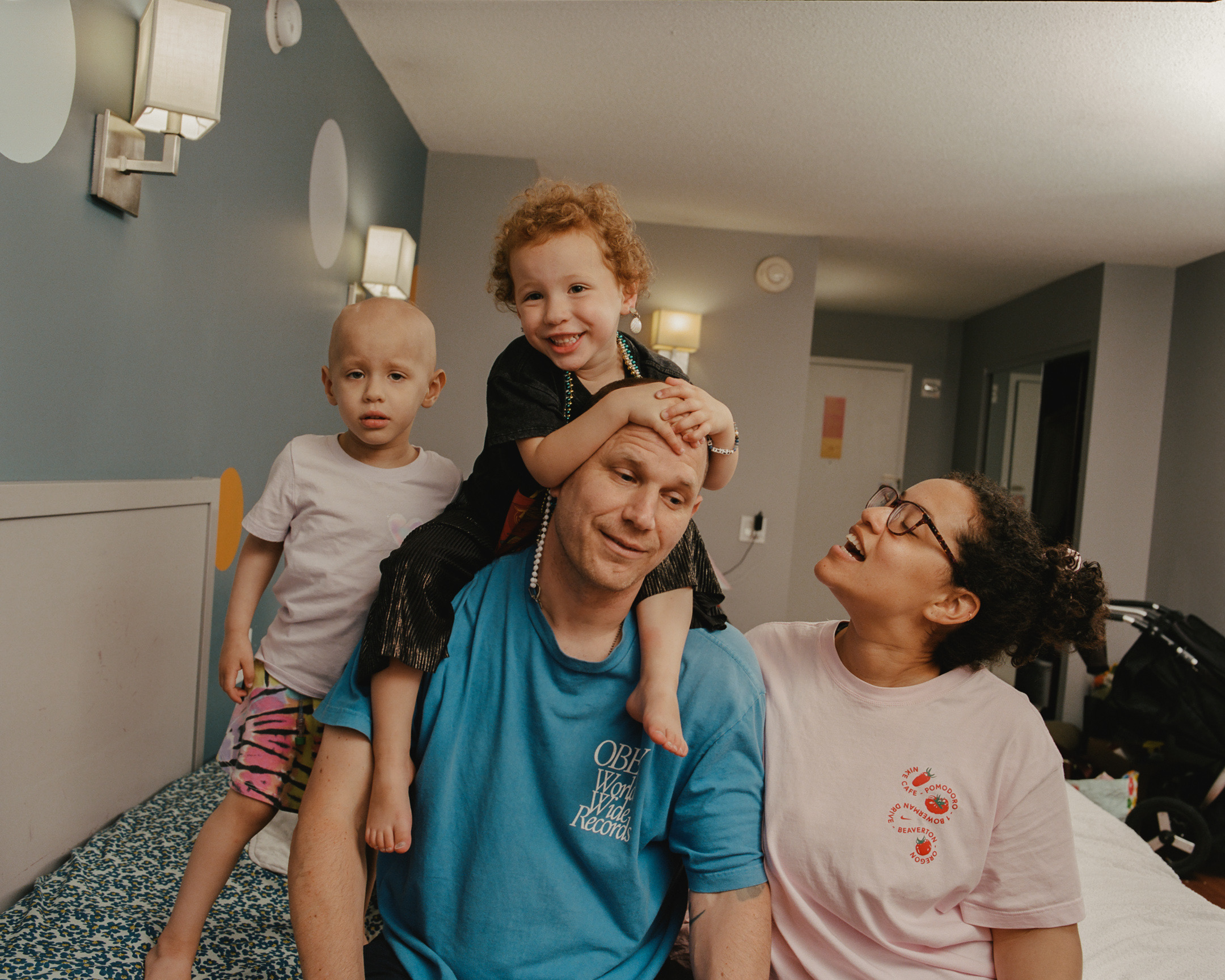
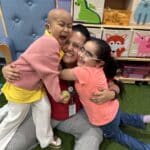
On the couch. In the waiting room. On the third-floor terrace with a mile of open cushion right beside them, Ruby and Beatrix King squish in shoulder to shoulder anyway. Ask them who gives the best hugs in the family and Ruby doesn’t hesitate. She points at her sister. Then she leans over and kisses her square on the cheek.
They’re twins. Three years old. In their mother Maya’s words: built-in best friends.
That closeness is the easy part of their story. The hard part is how much of the last year has tried to pull them apart.
Before everything
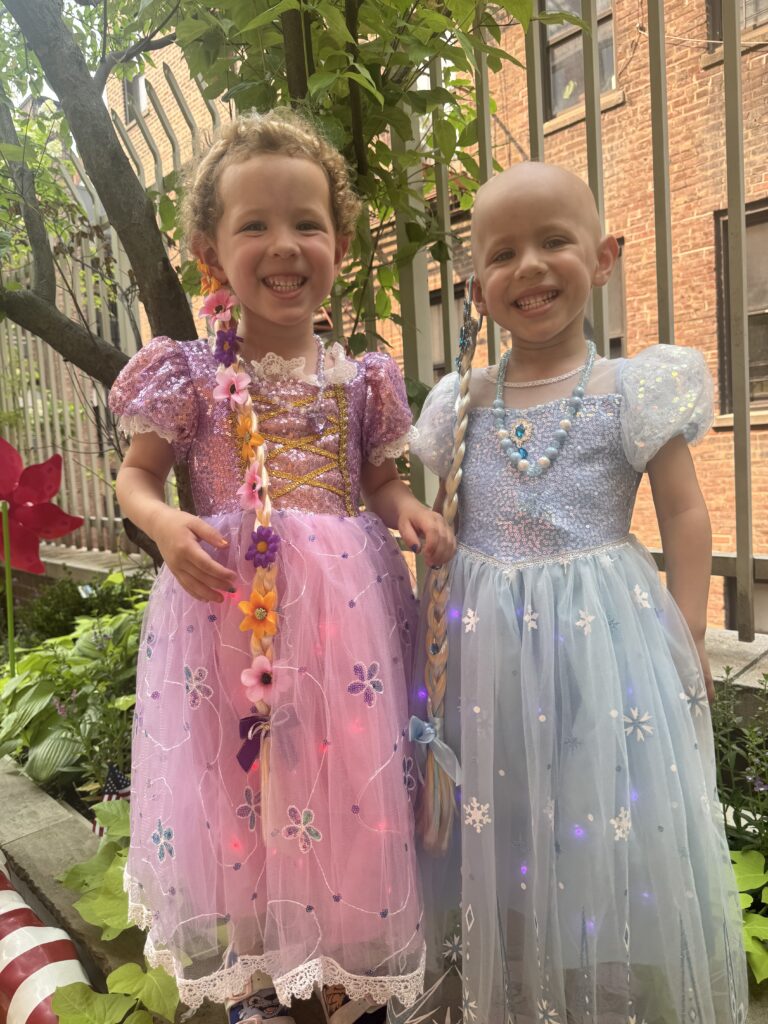
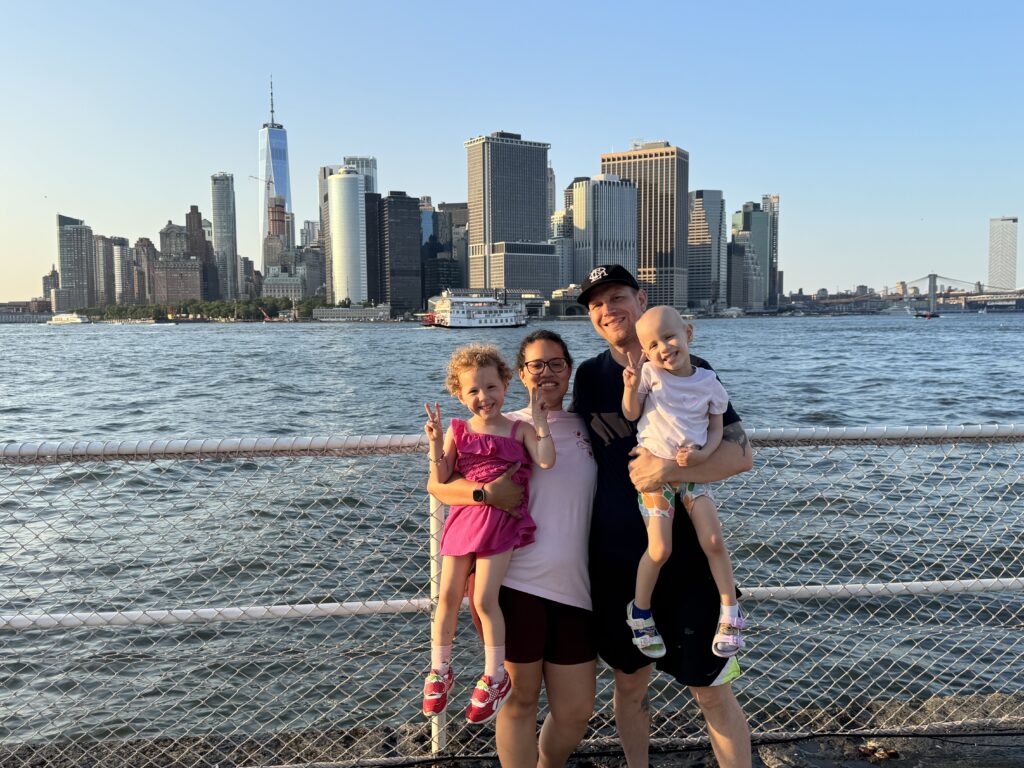
The Kings are from Rehoboth, Massachusetts. Kyle and Maya had just moved the family into a house with a yard. The kind of milestone that feels like the ground finally settling under your feet. Their days ran on the happy chaos of twin toddlers. Hikes. Scooters. Playgrounds. Snacks. The daily project of using up even a fraction of two three-year-olds’ energy.
Ruby and Beatrix were funny and busy and inseparable. If one headed for the swings, the other was already halfway there.
Then, Ruby got sick.
The word no parent is ready for
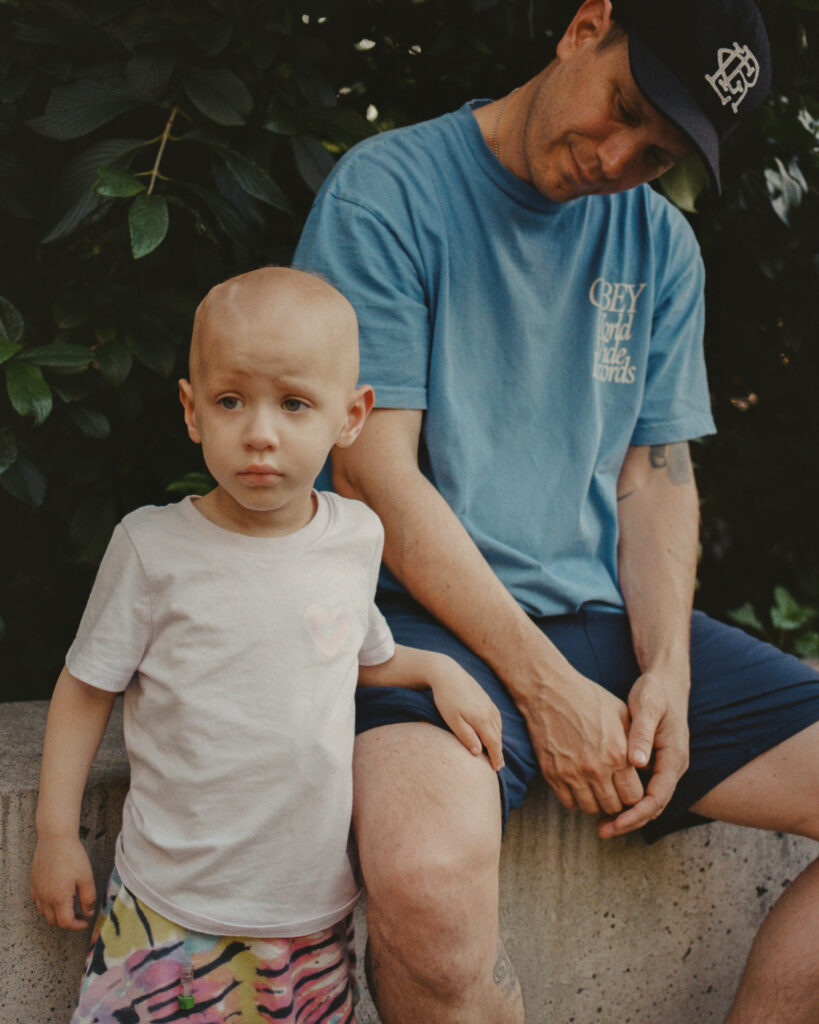
October 2025. Three weeks after the girls turned three, Ruby started throwing up. It came and went. A day sick, a couple of days fine, then sick again. She was tired, and even she knew it. She’d point to the back of her head to tell her mom it hurt.
It looked like a stomach bug. It wasn’t.
Kyle was in Kansas City for work when it unraveled. Maya took both girls to the pediatrician, then to the emergency room, then home, then back to the ER when the symptoms wouldn’t quit. That second visit, a CT scan found a mass. Ruby was flown by helicopter to Boston Children’s Hospital. There was dangerous pressure building on her brain. Surgery couldn’t wait.
The diagnosis was medulloblastoma, the most common malignant brain tumor in children.
Maya remembers the moment less as a memory than as a fog. “You’re so shocked and overwhelmed,” she says. “I asked the nurse to write down the word hydrocephalus, because my brain wasn’t taking in any information. It’s very out of body.”
The surgery lasted eleven hours. Kyle caught the first flight he could get out of Kansas City and reached the hospital with about fifteen minutes to spare before they wheeled his daughter in.
Beatrix went to her grandparents to wait for her people to come back together.
"Turn the lights on"
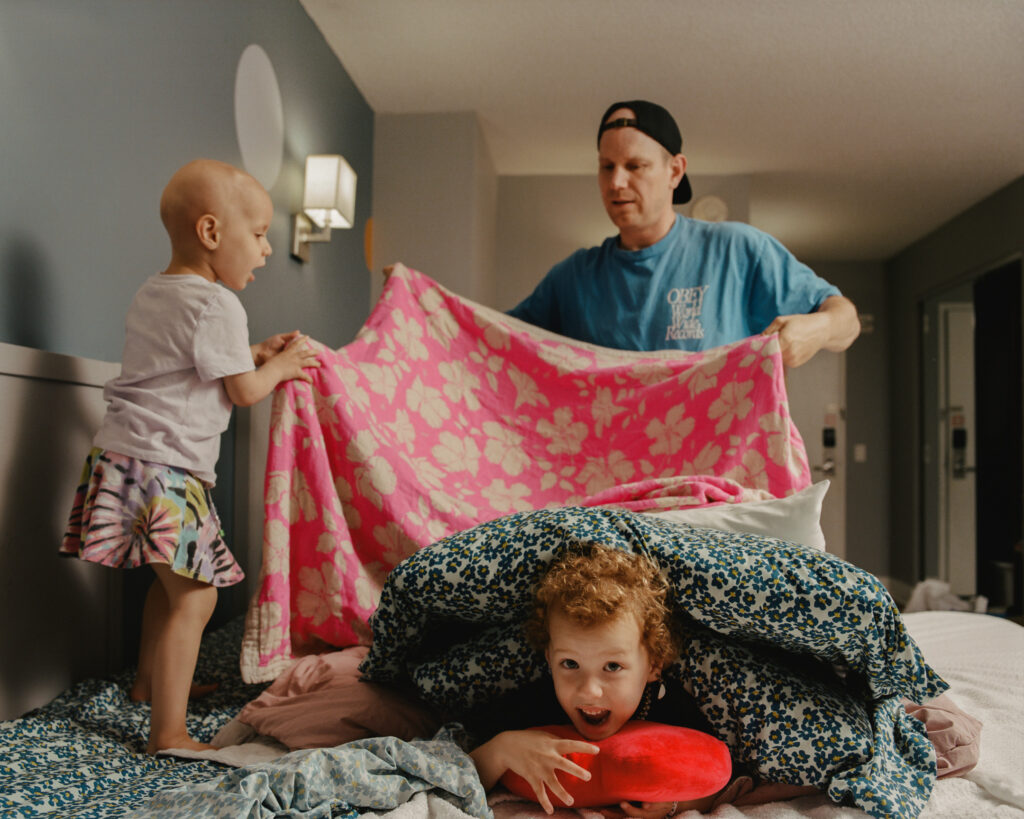
When Ruby came out of one of the most serious surgeries a small body can endure, the staff dimmed the lights to let her rest.
Ruby had other ideas. At the top of her little lungs, she hollered:
“Turn the lights on! Who turned them off?”
Kyle laughs telling it. “I was like, yes. That’s my girl.”
It’s a small story. It says everything. Strong-willed. Funny. Still, unmistakably, herself. Her parents say she never lost that. Not through the hardest treatment days, not through the appointments that emptied the tank, not through the long stretch of not-knowing that followed.
“Even on the hardest days, in the trenches of her treatment,” Kyle says, “I don’t think there was a single day we couldn’t find a laugh in her.”
Ten months of almost-together
Here is one of the quiet cruelties of childhood cancer, a part the gold ribbon doesn’t show. It doesn’t just threaten a child’s life. It scatters a family.
For nearly ten months, the Kings lived in pieces. Kyle on a plane traveling back and forth continuing to work and provide for the family while Maya signed consent forms and cared for the girls. Beatrix usually stayed at home or in a hotel with one parent while the other spent nights with Ruby at her bedside in the hospital.
During Ruby’s several surgeries, Maya and Kyle continued to send Beatrix to stay with her grandparents’ so they could pour everything into her sister in those moments.
Treatment stretched across cities and hospitals—a few months of care closer to home, a few more in Boston, a plan built specifically to spare Ruby from radiation. For one brief stretch, it seemed to be working.
Then a follow-up MRI found a second mass. It had grown that fast.
Another brain surgery. A feeding tube. A port. And the one thing the original plan had fought so hard to avoid: radiation, to the full brain and all the way down the spine. If that wasn’t enough, the proton therapy Ruby needed wasn’t available where they were.
It was in New York.
Less than a month passed between the recurrence and the family’s arrival in New York City. A social worker mentioned a place they could stay. And that is how, on June 8th, all four Kings finally ended up under one roof. Together. At Ronald McDonald House New York.
"This is awesome"
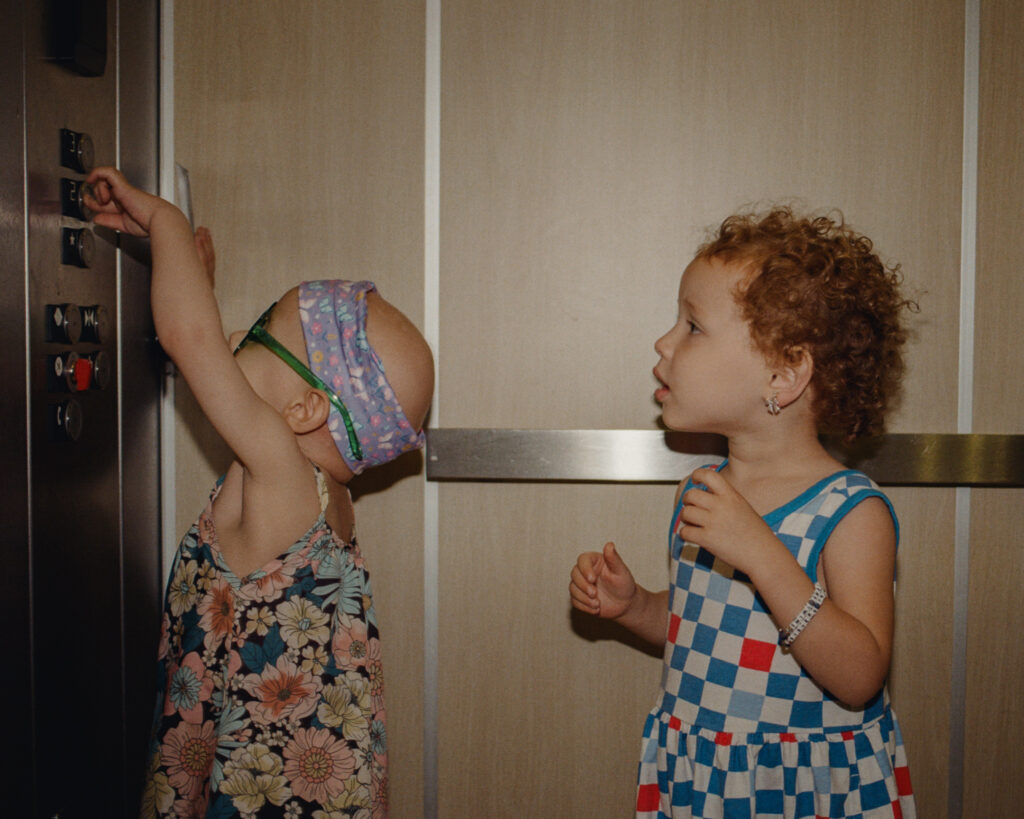
They arrived late at night. Kyle carried the girls up to the room first while Maya followed with the stroller. When the elevator doors opened, she could already hear them down the hall.
This is awesome. This is awesome.
“That made me feel at ease,” Maya says. “Like, okay. If the girls feel happy and comfortable here, we’ll be fine.”
She’d pictured a hotel. A place to sleep. She had no idea about the meals, the activities, the outings, the volunteers moving through the halls at dinner. She didn’t know the rides to and from Ruby’s daily radiation would be handled — that the front desk would setup the family with a pre-paid ride service to get Ruby to treatment and back, every weekday, for six weeks.
What all of that adds up to isn’t lodging. It’s the thing a scattered family had been missing.
“Everything we’d done so far had been almost entirely separated,” Kyle says. “Here, even though it’s tough, we’re only apart a couple of hours a day. The rest of the time, it’s just the Kings in New York.”
Ruby’s appointments usually wrap by mid-morning. Then the day is theirs to conquer. The Museum of Natural History. The Central Park Zoo, more than once. Playgrounds, and a lot of walking. A family, doing family things, in the same place at the same time.
The reality-show version
To be clear: gathering four Kings into one room is not necessarily always a peaceful act.
Sit them down for an interview and the girls rule the show. Kyle turns introductions into a game. “Is your name Nacho? Is your name Mommy?” Ruby answers in what he affectionately calls alien tongues. Beatrix, asked a question, fires one back: “Are you twins?” There’s a run on the microphone. There is enormous delight in hearing your own voice say hello into a tiny, magnetic black dot on mommy’s shirt.
Ask Ruby her favorite food and she locks on like a lighthouse. “Strawberries. Strawberries. Strawberries and grapes and strawberries.” Ask what flavor of ice cream the House would be and she works the entire case — vanilla, banana, strawberry — before landing, inevitably, back on strawberry.
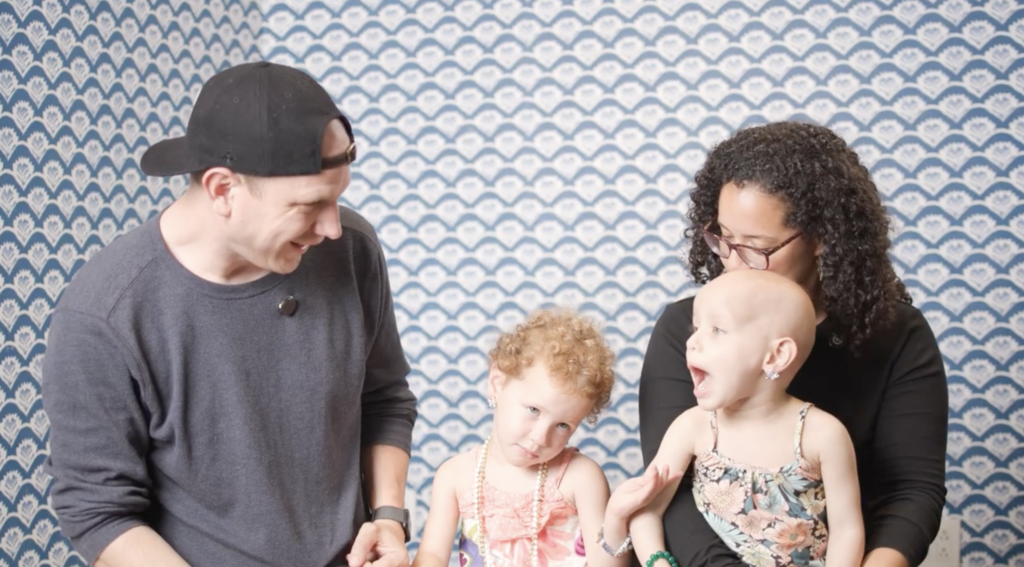
Somewhere in the middle, both girls hit the wall at the exact same second, in what Maya calls “unison whining.” Out come the scratch-art pads. Maya glances at the camera, unbothered, a mother who has seen so much worse than a tiny Tuesday-afternoon meltdown.
“It’s like family vacation,” she says. “But the reality-show version.”
That’s the part worth holding onto. Underneath the treatment and the surgeries and the ten-month whirlwind, Ruby and Beatrix are still two three-year-olds who fight over the last scratch-art pad and would rather run the stairwell than take the elevator. The House gives them room to be exactly that. Kids.
The sister who brings the blanket
Beatrix is living this too, from the passenger seat, in a way no three-year-old should ever have to.
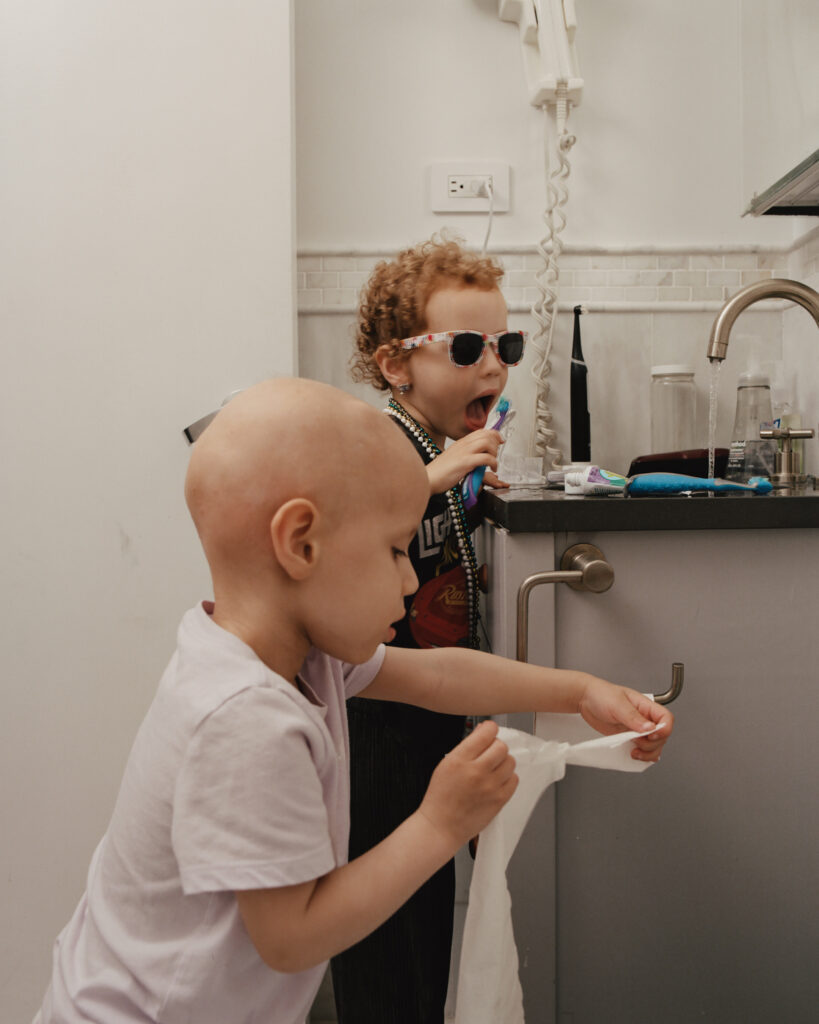
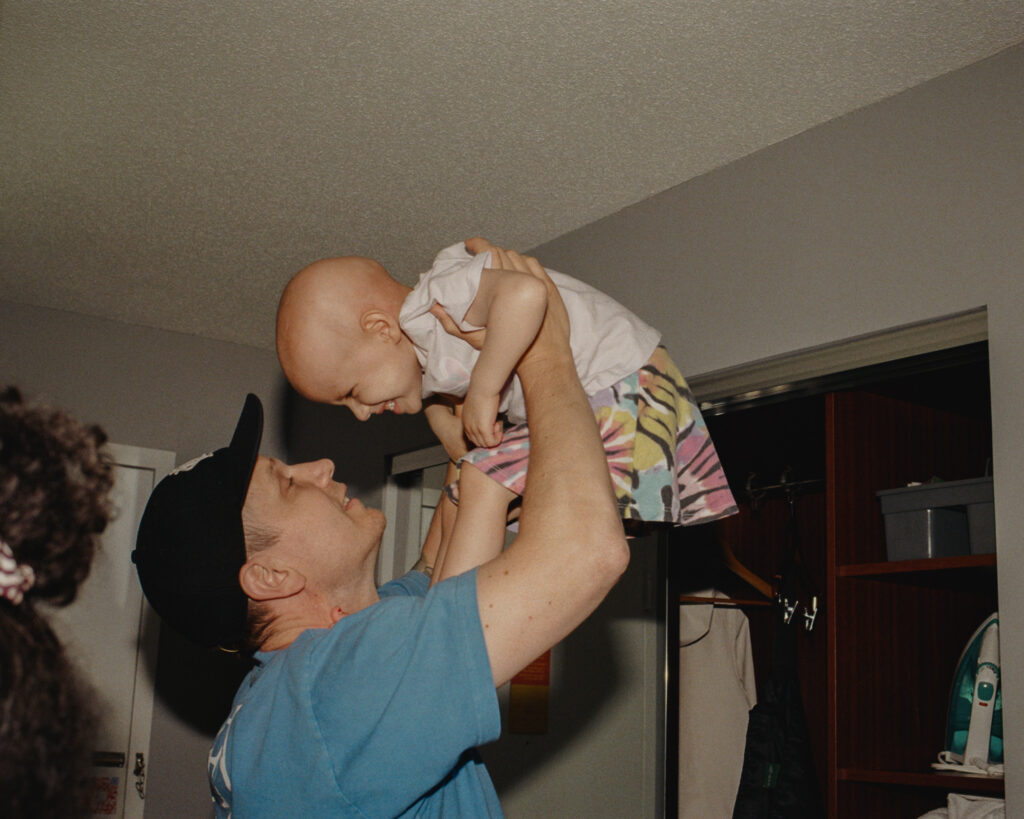
She has learned to read her sister. When Ruby is low, or nauseous, Beatrix brings her a blanket. Rubs her back. When it’s safe to help, she likes flushing the feeding tube, smoothing on a band-aid. She wants in. She wants to be part of Ruby feeling better.
And because they are sisters, and because they are three, they fight over who gets to help first.
“She’s learning about empathy,” Maya says, “in a really unique way.”
Ruby is not Ruby without Beatrix. If Ruby wants the microphone, Beatrix wants the microphone. If Ruby slips into alien tongues, Beatrix meets her there. It goes both ways, every time.
A support group, in the wild
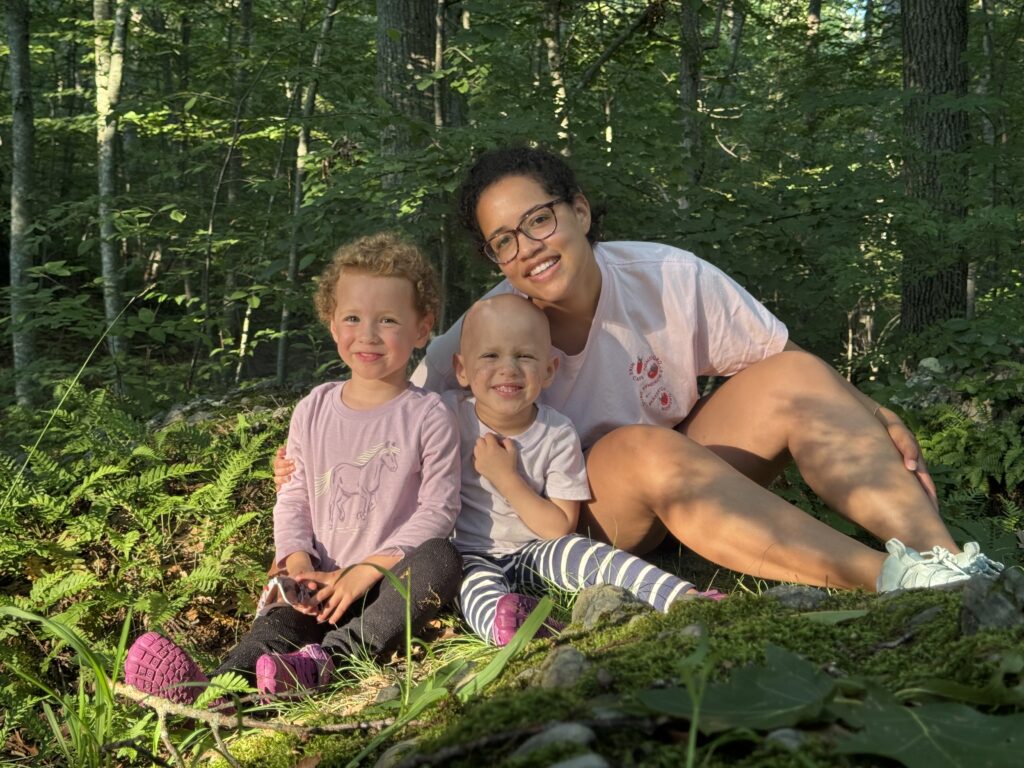
The family’s steadiest support has come from other families walking the same road. One afternoon on the terrace, chalk out and bubbles going, the Kings fell into long conversations with three different families in a single day. At the treatment center, they spotted a boy with a scar much like Ruby’s. Another medulloblastoma family. They connected on sight.
“It’s a support group,” Maya says. “Just naturally occurring, in the wild. You end up chatting with other families.”
There’s a shorthand here the outside world can’t offer. A place where you can skip the explaining and just talk.
The Fourth of July
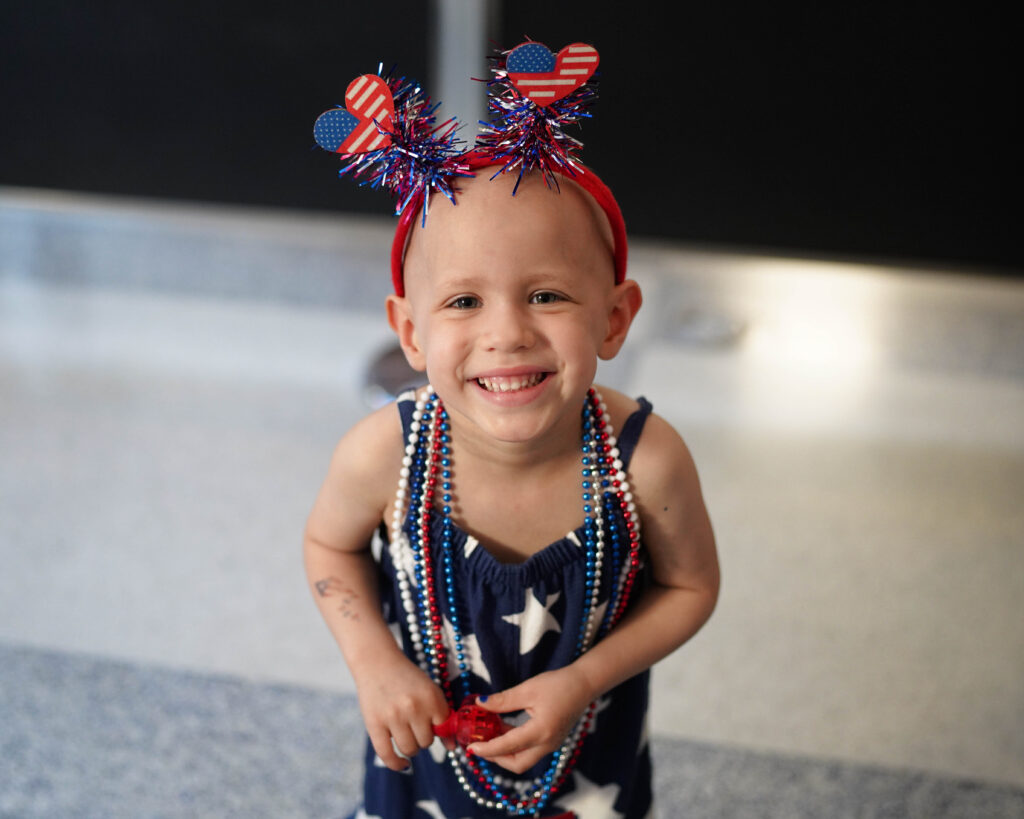
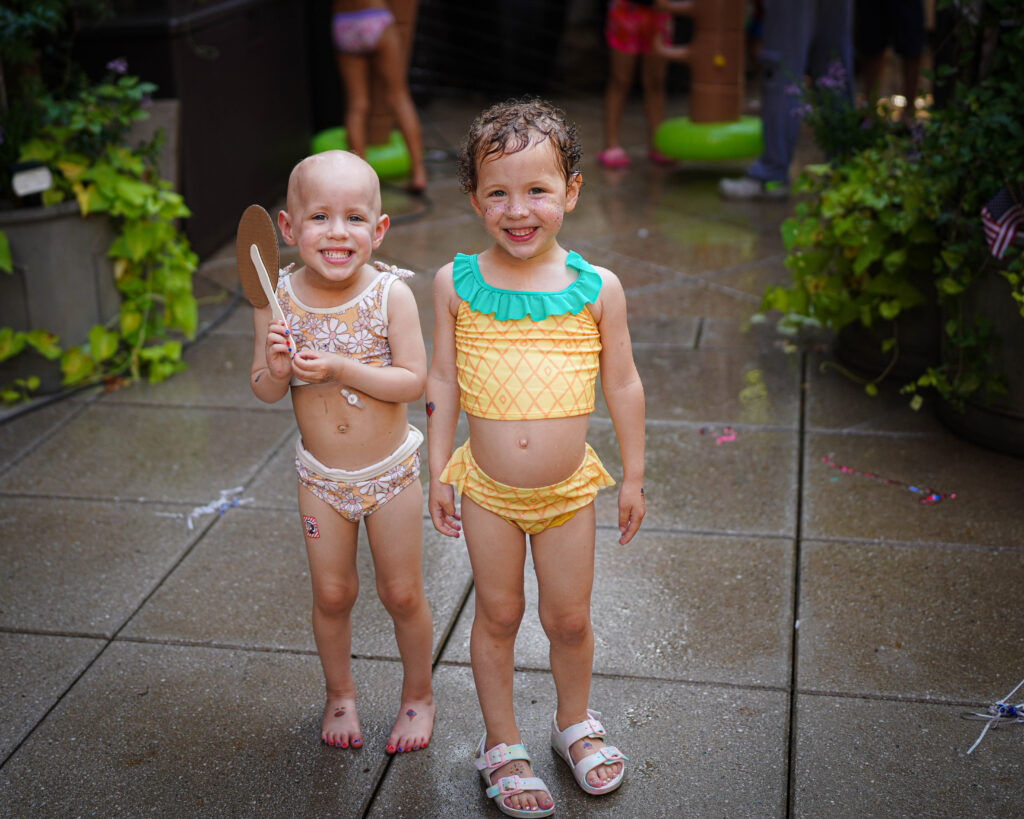
Ask the Kings their best day in the House, and both parents answer without conferring: the Fourth.
It started on the terrace. Barbecue, a sprinkler, chalk, burgers, hot dogs. Then, when they figured the day had peaked, the House loaded all the families onto buses for a front-row seat at South Street Seaport, with an NYPD motorcycle escort clearing the way. Sirens, lights, half of Manhattan stopping to let them pass. People pulled out their phones to film the procession, certain it had to be someone important.
It was.
Out on the water: barges of fireworks, the Brooklyn Bridge off to the left, the nation’s 250th painted across the sky. It may have been the biggest display the family had ever seen. And one detail Maya can’t get over. Last year, the fireworks terrified the girls. They cried. This year, they cheered.
Just a year older. Just a little further from the worst of it.
What it's worth
There’s a night Kyle keeps coming back to. He and Maya finally got a version of a date night: a charcuterie board, a couple of little electronic candles, the third-floor terrace, the blinds open so they could watch the girls sleep through the window. They stayed out late, just catching up. When they finally cleaned up to head in, they found the terrace door bolted for the night. It locks at ten. It was nearly midnight. Two grown adults, sheepishly calling the front desk to be let back into their own evening.
They tell it as a joke. It lands as a gift. Two exhausted parents handed one ordinary night together for the first time in months.
Asked what he’d say to the people who make the House possible, Kyle started with thank you. Then:
“Everyone’s story is different. But for our family, we’ve been in a whirlwind for going on ten months. And the comfort of knowing this place is here—a place to rest your head where we can get her care and focus on her and our family—is priceless. It’s given us so much time together. Some of our best memories since diagnosis have happened here.”
–Kyle King
The gold ribbon
Childhood Cancer Awareness Month wears a gold ribbon every September. Gold, because what it stands for is rare, and precious, and worth everything.
It stands for the kids. For the Rubys, strong-willed and big-hearted, hollering for someone to turn the lights back on.
But it stands for everyone around them, too.
The Kyles, racing for the first flight out to get to a daughter’s side.
The Mayas, asking a nurse to spell the word and holding down the fort with grace.
And the Beatrixes, three years old, carrying a blanket across a room because their best friend needs one.
Cancer’s cruelty takes many forms. One of the hardest is how quickly it can scatter a family, just when they need one another most. One parent keeps vigil at a hospital bedside. Another boards a plane. A sister stays with relatives, counting the days until her family can finally be together again.
For ten months, that was the disjointed shape of the Kings’ lives.
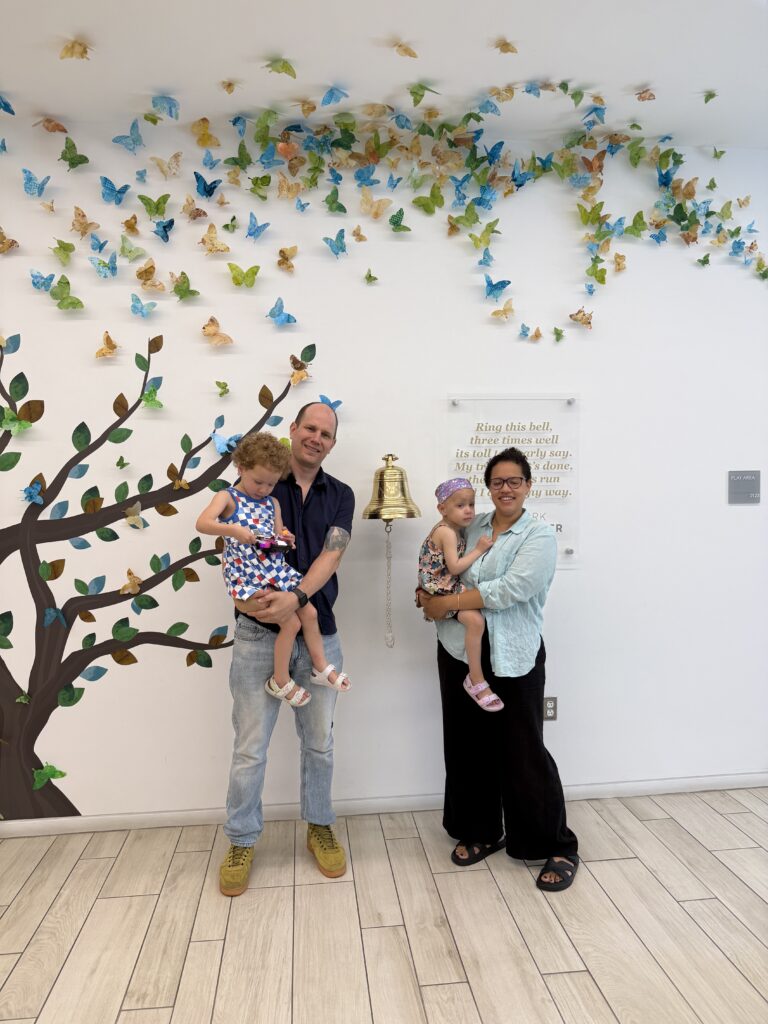
And then, for six weeks in New York, it all changed.
Ruby and Beatrix King ask to sit together. Every time.
Today, a House makes sure they get to.
A Family Together at Ronald McDonald House New York
 Newsletter
 Family
 Staff
Staff