
And They Think We’re the Strong Ones
Close to Father’s Day, the three men sat down together for an hour at Ronald McDonald House New York. What came out wasn’t one story. It was three. Three men, holding fatherhood from three different angles, and somehow ending up in the same impossible place.
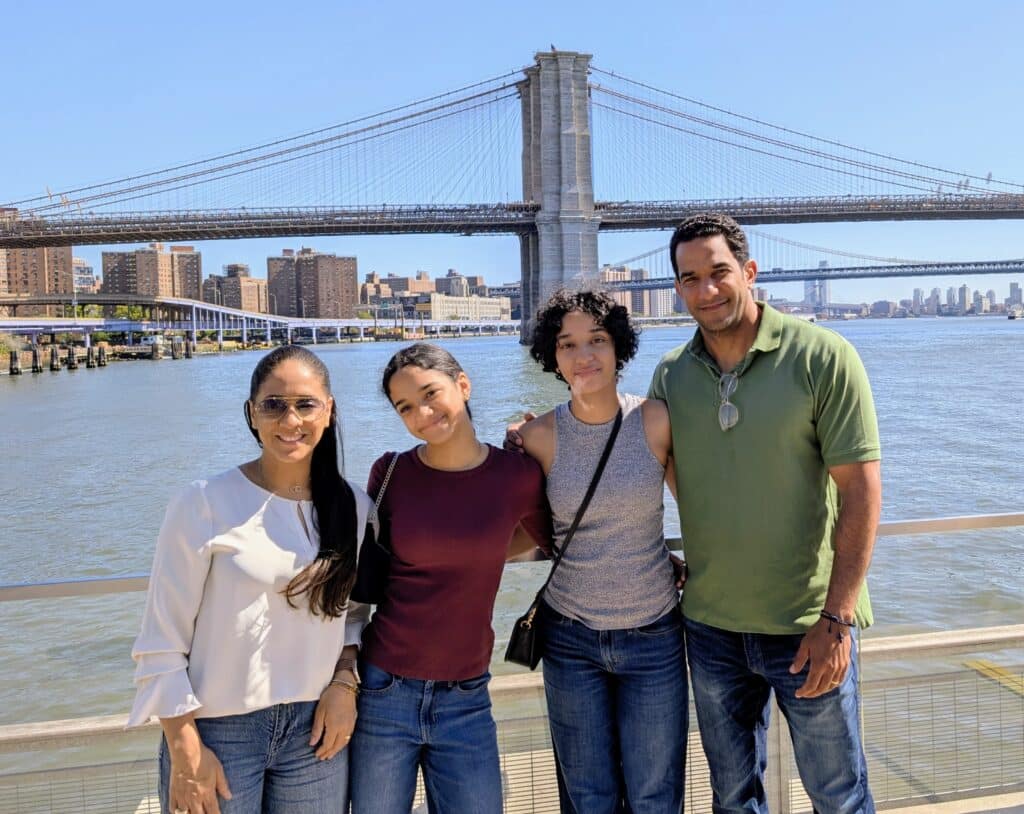
Three fathers. Three countries. One Father’s Day conversation. A conversation that revealed what strength really looks like.
They arrived as strangers. A man from Trinidad and Tobago. A man from Guyana. A man from the Dominican Republic. Different languages, different jokes, different theories of how a father is supposed to behave. If their children hadn’t gotten sick, they would never have met.
Close to Father’s Day, the three men sat down together for an hour at Ronald McDonald House New York. What came out wasn’t one story. It was three. Three men, holding fatherhood from three different angles, and somehow ending up in the same impossible place.
Here is what each of them carried in.
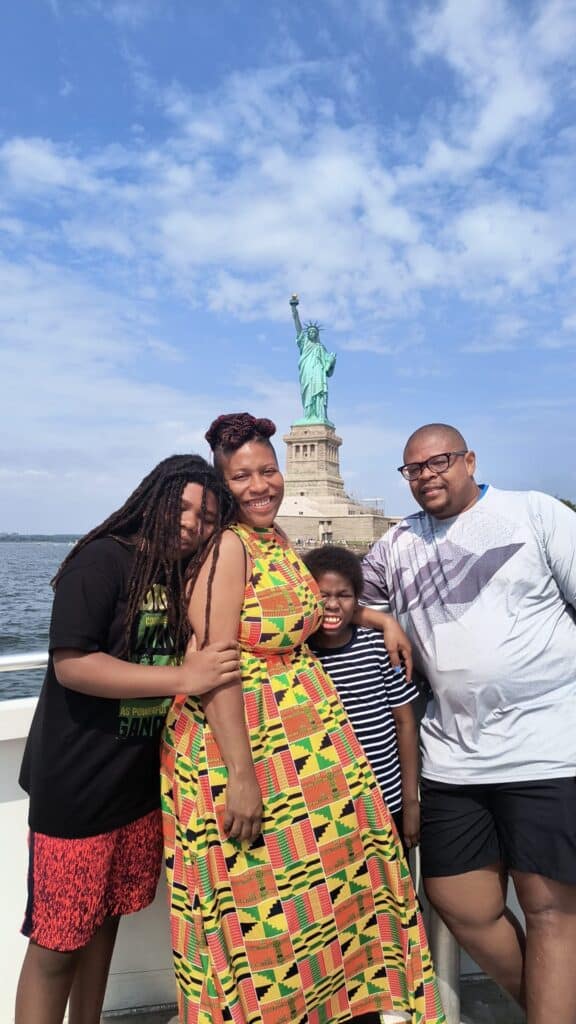
Dale: The Dad Who Went from Protector to the Protected
Dale has a theory of fatherhood, and it fits in three words.
Provide, protect, prepare.
- Provide what they need before they’re grown.
- Protect them from harm.
- Prepare them for the world.
Family
He Gave His Brother More Than a Gift
Ask him the job description and that’s the answer. Clean. Confident. The voice of a man who thought he understood the assignment.
Then his son Dimitris got sick. The pain started in a leg on a Mother’s Day in Trinidad. Within weeks, chemotherapy. Within a month, the family was packing for a hospital in New York, because protection now meant leaving everything they knew.
The protector found out what it feels like to watch his ability to protect his family disappear.
“I almost ran off the road three times on my way from work to the hospital,” Dale said, remembering the day he got the call. He didn’t know what kind of cancer his son had. He didn’t know much about cancer at all. So, his mind did the cruelest thing a father’s mind can do. “On two or three occasions,” he said quietly, “I actually started to compose his eulogy.”
And here is where protection turned around and pointed the other way.
When He Became My Hero
One night in Trinidad, the nurses needed blood. Dimitris’s veins had collapsed. They tried both arms. They tried a leg. He didn’t scream, but Dale could see the pain, could see the tears. So Dale offered the only thing a helpless father has left to give. “Take it from me,” he told them. “You could take the blood from me.” The room laughed but secretly wished that was a viable option.
They took a break instead. Dale talked his boy back from the edge. Ten, fifteen minutes later, his son looked up. “Daddy, I’m ready to go back. Let’s go.”
“He became my hero,” Dale said, “at that particular instant.”
When Dimitris needed a bone marrow transplant, his thirteen-year-old brother, Darius, didn’t wait to be asked. “You all don’t need to ask me any more questions,” he said. “Just let me sign.”
Dale came in believing protection was a thing a father does. He’s leaving with proof it’s a thing a family does, in every direction all at once.
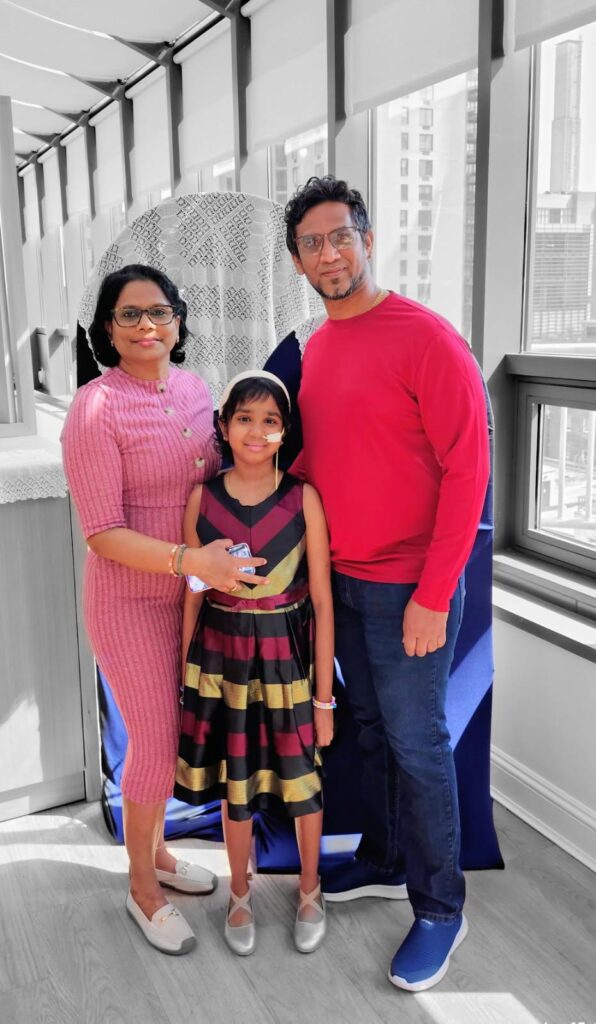
Haimdat: The Dad that Gave a Piece of Himself Away
Family
What a Real Superhero Looks Like: Angelica’s Story
Haimdat is, by his own glad admission, “a child in an adult’s body.” His daughter Angelica, who is nine, takes after him.
“We are crazy together,” he said. “We run; we make a lot of noise. I’m surprised the neighbors haven’t complained yet.” A man in the hardest year of his life, and he laughs easily. You learn to laugh easily and at every chance you get.
For a Dad, the Giving is Automatic
If Dale’s word is protect, Haimdat’s is give and he means it more literally than most. The kidney Angelica is living with is his. He gave her one of his own. Then a routine vacation to New York turned into a rare cancer that can follow a transplant, and the giving started over.
He gave up his job to be here. He gives Angelica a steady face every single day, which costs him more than the kidney did. “We are taught to be strong,” he said. “You cry in your quiet space. But in front of them, you have to be strong, because if you break down, then the entire structure breaks down.”
That’s the sacrifice nobody photographs. The composure held in public; the grief spent in private. There was a stretch when Haimdat had to leave his wife and daughter to go home and manage things. “Oe of the worst days of my life,” he said, getting phone calls of his wife crying, “pictures of things that I don’t want to see, but I have to see them.”
He came back. He doesn’t intend to leave again.
We’re Going Home for her Birthday
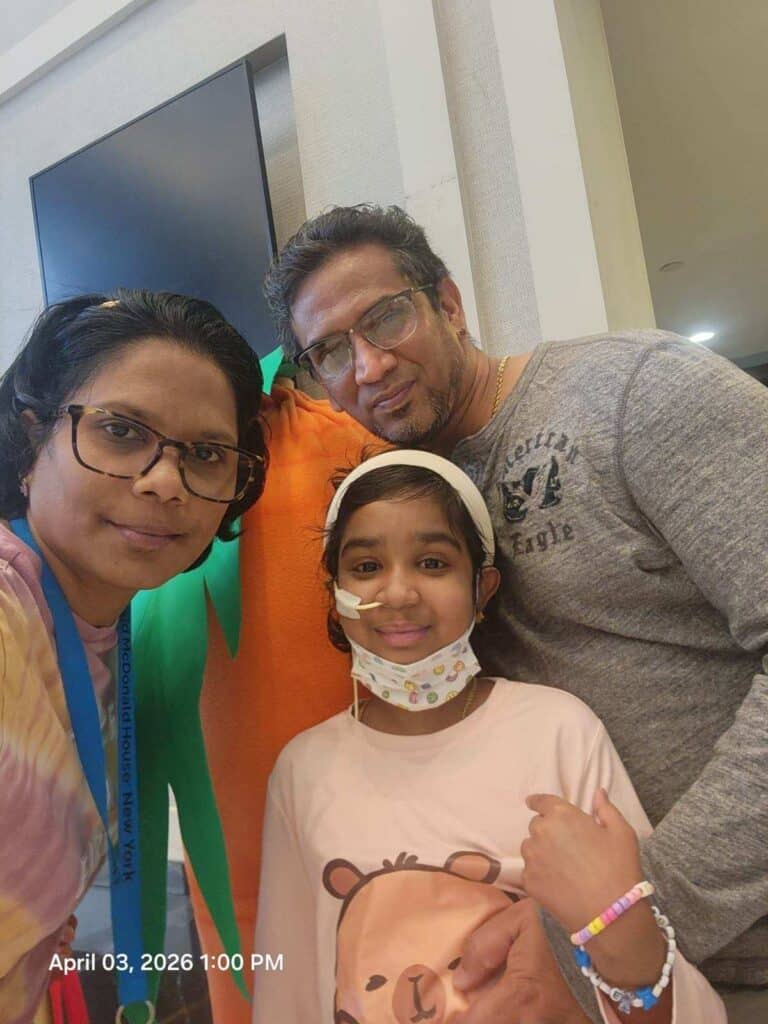
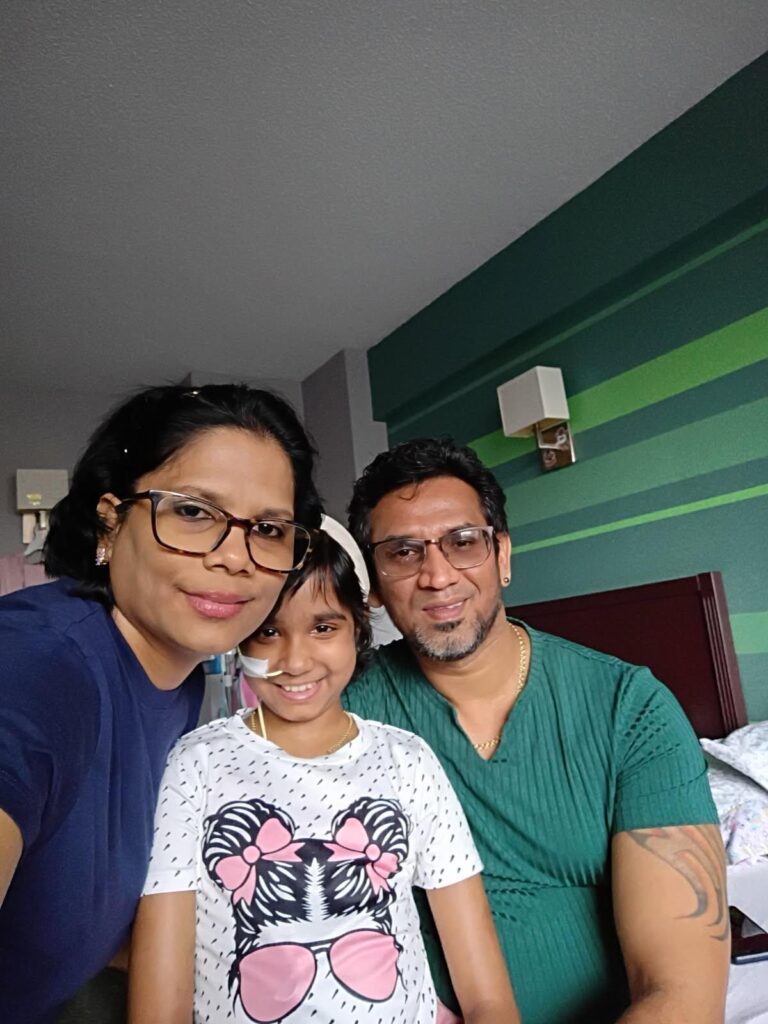
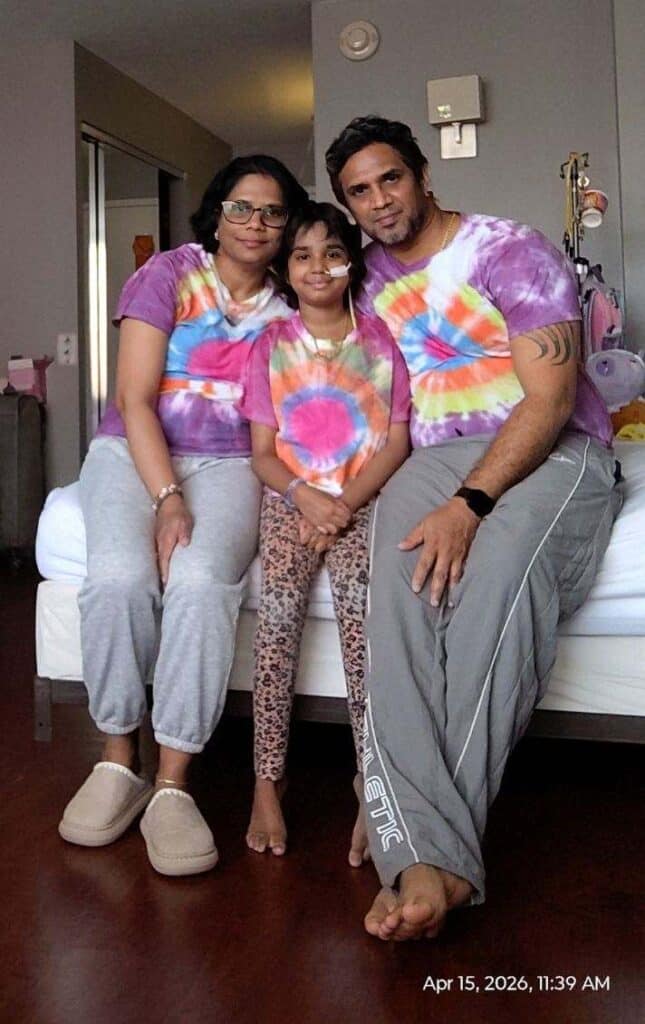
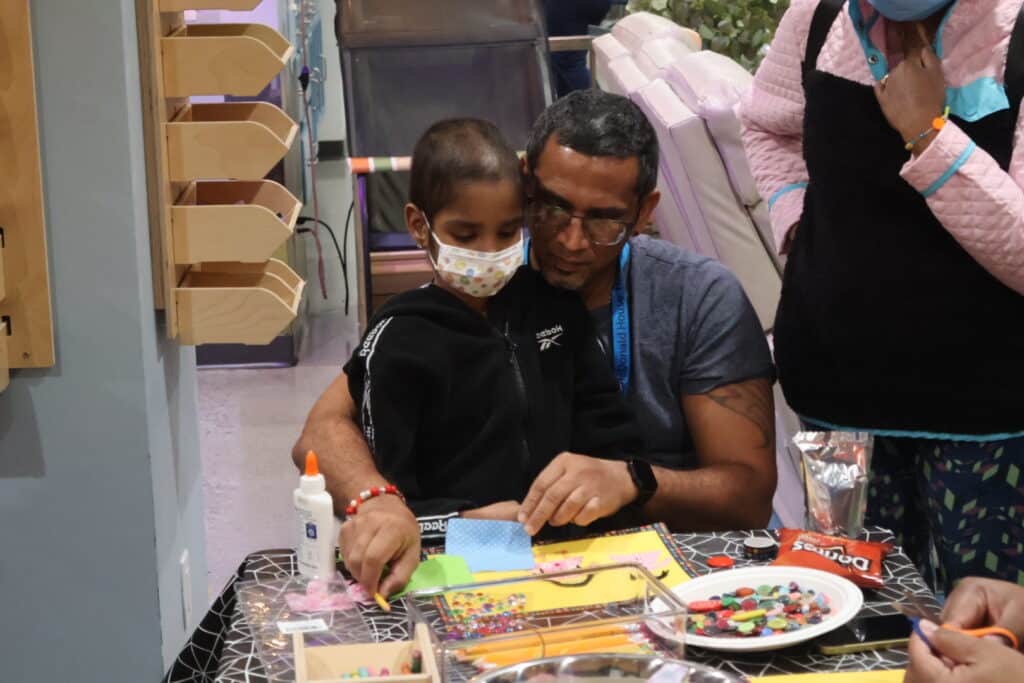
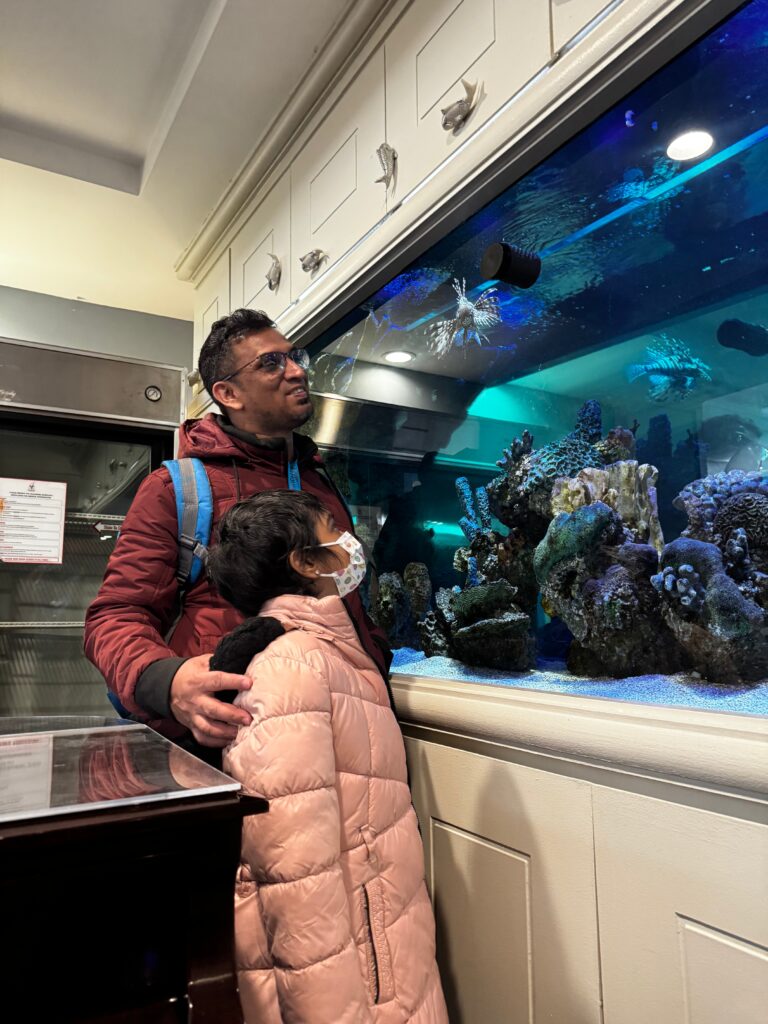
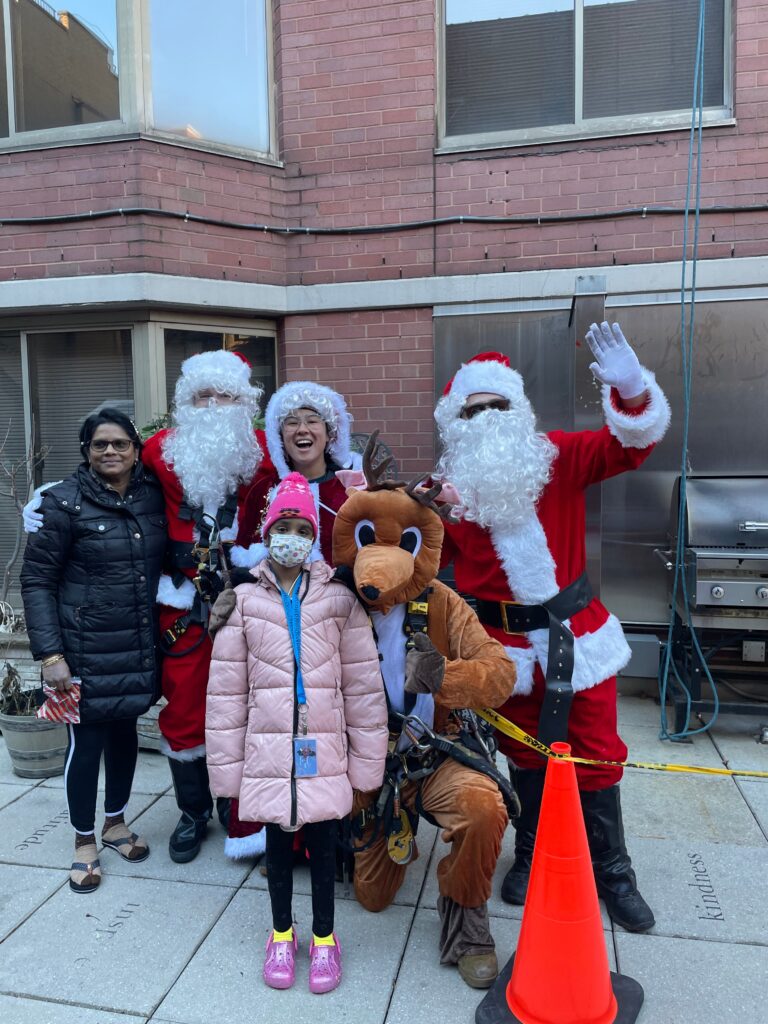
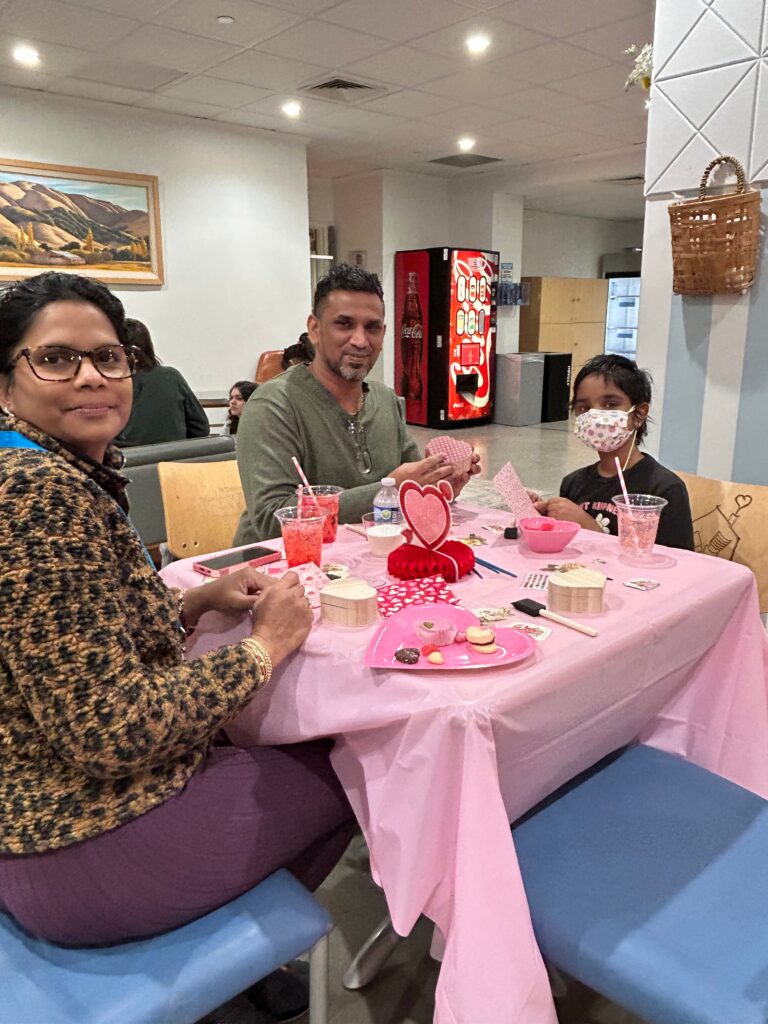
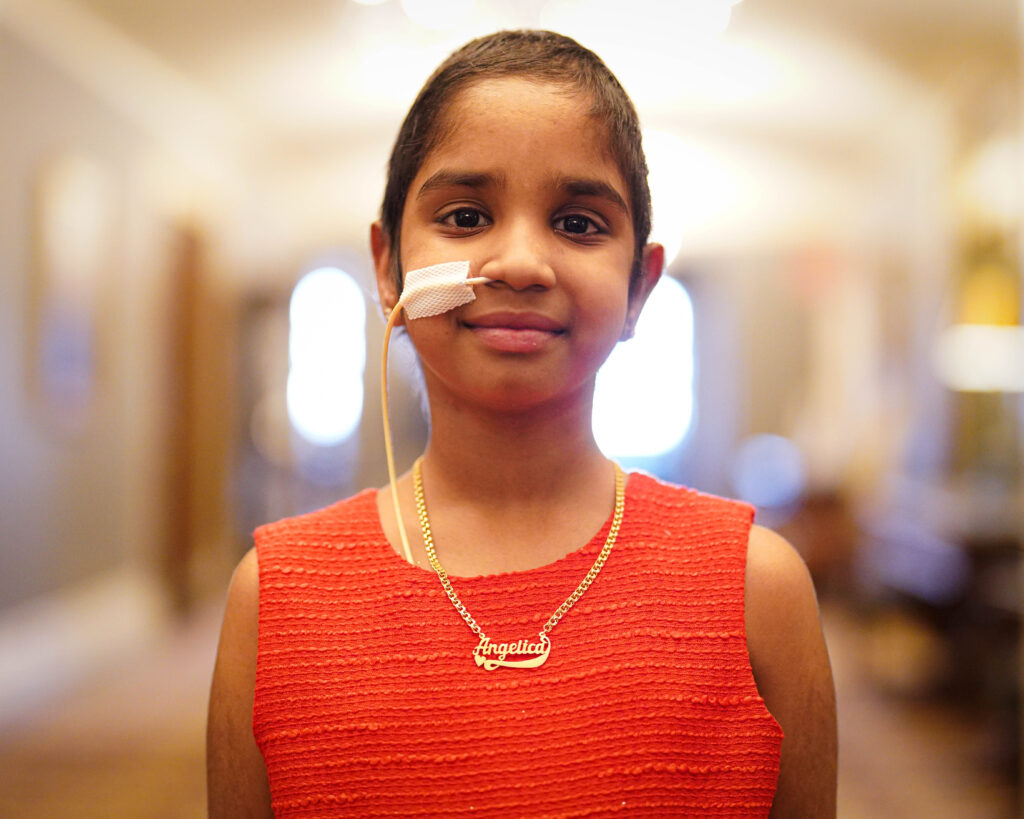
What does he give now? He has a date picked out. Her next birthday, in February. “We’re going to be home for that birthday.” He can’t promise that. He says it anyway, every day, because a father gives his child a future even when he has to manufacture it on the spot.
Angelica, for the record, is harder to fool than he’d like. She knows a transplanted kidney doesn’t last forever. One day she asked him, plainly: if this kidney goes bad, will we really get another one to give me? There is no script for that question. Haimdat keeps giving the only answer he has, which is to show up tomorrow.
Juan: The Dad Who Got Remade
Juan has come the farthest, both in physical distance and emotional strength.
He’s from the Dominican Republic, and he’s been at the House the longest of the three—since February of 2024. He speaks mostly in Spanish, reaching for English when the feeling outruns the grammar. It never slows him down. What he needed us to understand, he made us understand.
A Dad in the Present
Though he does give and protect, Juan is defined by the present. Today, Juan is here.
“When she smiles,” Juan said of his daughter, Amy, “I smile.” That was the easy part. The hard part was the months she couldn’t walk, her legs “only bones and skin,” and Juan carrying her to the bathroom, every time she needed. The hard part was learning to live, in his words, “automatically.” No future. No calendar in his head. “Just today. Okay, let’s do it. Tomorrow, I don’t know.”
And being that present, that close, did something to him he didn’t expect. It rearranged who was carrying whom.
“I think that she supports me more than I support her,” he said.
When the Roles Reverse
He watched the way Amy faced her cancer. Once she asked him why it was happening to her, and before he could find an answer, she found her own. I have to do it. I want to live. “She gave me the strength,” Juan said, “because it wasn’t me.”
One day Amy was tired of her father never leaving her side. “Go to the park,” she told him. “You work too much. Go.” So he went. It was his first time out. He got to 72nd Street before his wife, Yaniris, called. Come back, she’s crying. When he reached her, he asked why she’d said she would be okay. Amy, still crying, said, “No, no, no, I’m okay. I’m okay. I’m good.”
She had sent him to the park so he wouldn’t have to watch her cry.
“When she [smiles], I smile,” Juan said. “But when she [cries], I cry. So, she tried to not generate pain in me.” He shook his head. “My daughter is stronger than me a billion times. I think she [teaches] me something that I never teach her.”
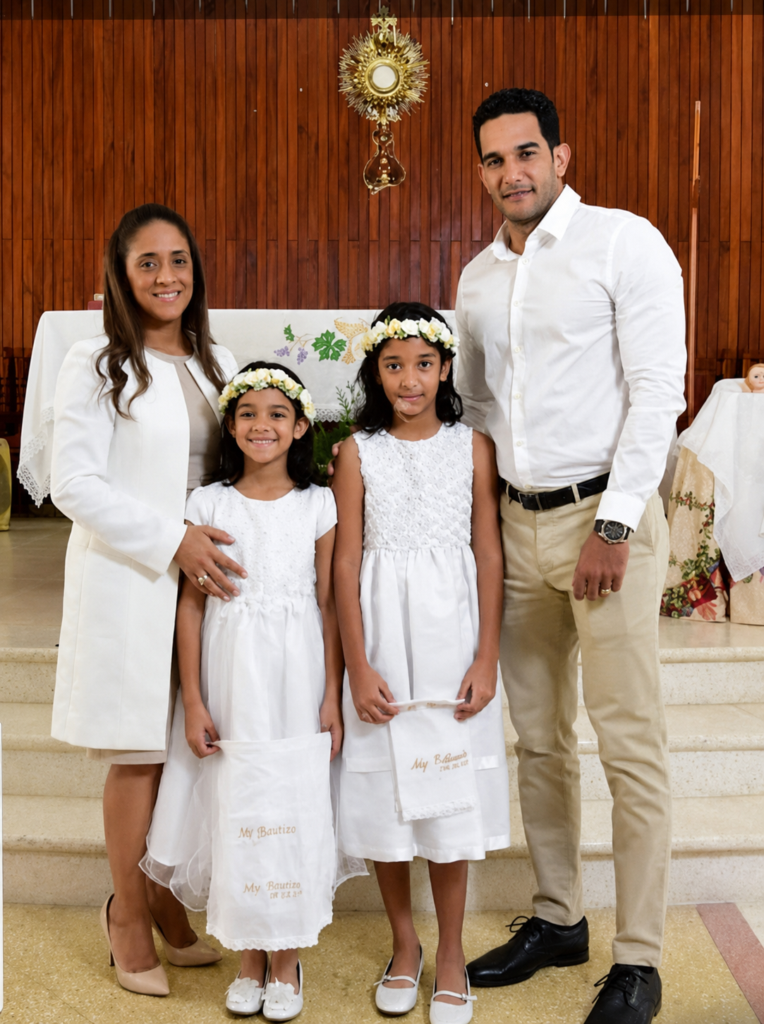
The Reason We Keep Families Close
The House changed his whole family, too, quietly, in a way he didn’t see coming. Back home in the Dominican Republic, everyone had their own room. His wife, his two daughters, all of them in their own corners of a comfortable life. Then everything shrank to a single room in a strange city, and a family that used to scatter had nowhere to go but toward each other.
“We have to be together,” Juan said. “Talk. We talk more.” He and his wife, side by side through the worst of it. He and his daughters, closer than the busy version of home ever allowed. It took a continent and a catastrophe to compress them into the same small space, and what came out of that pressure was a tighter family than the one that left. He appreciates them more now, he said. All of them. He is, of all things, grateful for it.
Don’t Be Afraid to Ask
He keeps his humor through every bit of it. You might remember Yaniris from her feature in our recent Mother’s Day Roundtable. She is also Juan’s wife. He told us with total sincerity that she is the best woman he’s ever known.
For two months he couldn’t make coffee, because back home coffee lives on a stove and here it lives in a machine—a grown man undone by a coffee maker in the middle of his daughter’s cancer treatment.
To anyone walking in scared for the first time, Juan’s advice grown directly from his experience is five words: “Don’t be ashamed to ask.”
And when we asked Juan how he’d thank the people of this House, he stopped. “I don’t have words,” he said. “In Spanish or in English.” He believes in God more now than he ever did.
He has a reason to. Today Amy is in remission, thriving, and has even passed multiple New York State Regents exams in English, her second language. She is healthy. Doing great. The little girl who sent her father to the park so he wouldn’t see her cry—the one who decided, on her own, that wanting to live was enough—finally won.
More Quotes from our Dads
How Three Strangers Hold Each Other Up
Put these three men (Juan, Haimdat, & Dale) in a room and the differences between them are strikingly obvious. Dale runs on framework. Haimdat runs on warmth. Juan runs on faith. One explains, one jokes, one hopes.
What they share is heavier than what divides them. All three are thousands of miles from home. All three know the specific helplessness of a father who can fix nothing. And all three found, inside this House, a thing none of them expected: each other.
It shows up in small, material ways. A family whose donated clothes don’t fit passes them to a family they do fit. Somebody cooks a Guyanese-style meal for a household that isn’t theirs. A dad learns the coffee machine and teaches the next bewildered father how it works. “The relationships you develop here,” Haimdat said, “are the best value you take away.” And when one family suffers a loss, he added, it lands on every family in the building. They grieve together because they understand together. Nobody here has to explain why they’re tired.
That is what the House is actually built to protect. Not the children only, though always the children. The whole fragile, funny, load-bearing structure of a family—kept under one roof, fed and housed and held together long enough for everyone to heal.
The Thing They All Got Wrong
So, we asked three very different fathers what strength looks like, and not one of them described anything that looked like a father or like himself.
Dale described a son walking back to a needle that had already hurt him. Haimdat described a daughter asking, without flinching, what happens when the kidney runs out. Juan described a girl hiding her tears while he was near so her father could have one afternoon in the sun.
The fathers carried the fear. They did the crying in the quiet space. They gave the kidney, nearly drove off the road, held the certainty they didn’t feel. And every one of them walked out of that hour convinced that the bravest person he has ever met is small enough to carry to the bathroom.
This Father’s Day, three fathers want you to know who really held the family up.
They’ll tell you it definitely wasn’t them.
We believe them, but we also think they’re being a tiny bit modest.
More Stories
-
-
-
-
-
-
Family
The First Night
For families arriving in crisis, the most important moment isn't the flight or the hospital visit. It's the first ten yards from the cab to our front door.
 Newsletter
  Family
  Family
  Staff
Staff  Newsletter