
The First Night
What Happens in the Twelve Hours Before It All Begins
May is Mental Health Awareness Month.
During the month, the country will talk about therapy. About medication. About the slow, daily work of staying well.
But for the families who walk through the door of Ronald McDonald House New York, mental health doesn’t begin in a therapist’s office. It begins on a sidewalk.
It begins with the first night.
By the time a family reaches East 73rd Street, they very well may or may not have already had the worst day of their lives. Sometimes several in a row. A diagnosis. A flight. A child wheeled into surgery. A home left behind in a way that no longer makes sense.
Logistics is not what they need.
What they need is stabilization.
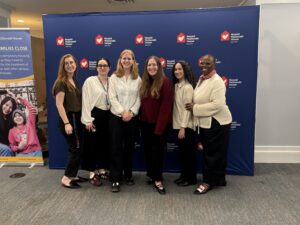
Kaitlin Raybon
Assistant Director of Family Support
"What helps first is not more information or logistics alone, but stabilization: safety, compassion, and spaces where families do not have to hold everything by themselves for a moment. The practical support matters deeply, but its impact comes from how it restores a sense of grounding, autonomy, and the ability to cope during crisis. "
A Door, and a Hope
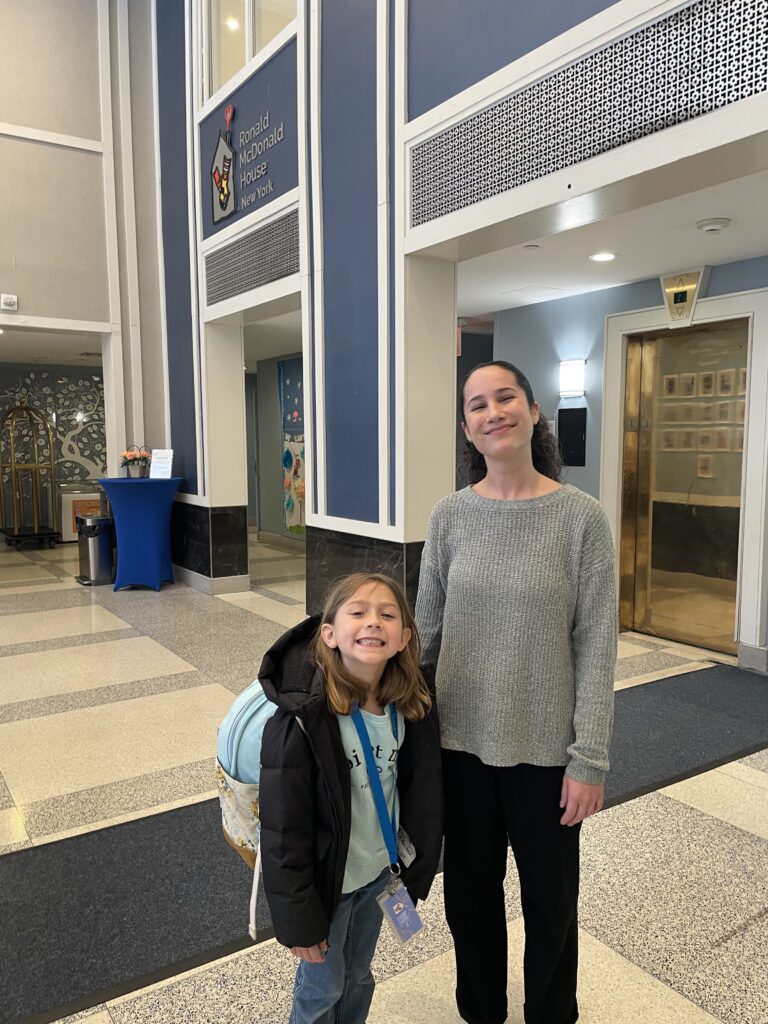
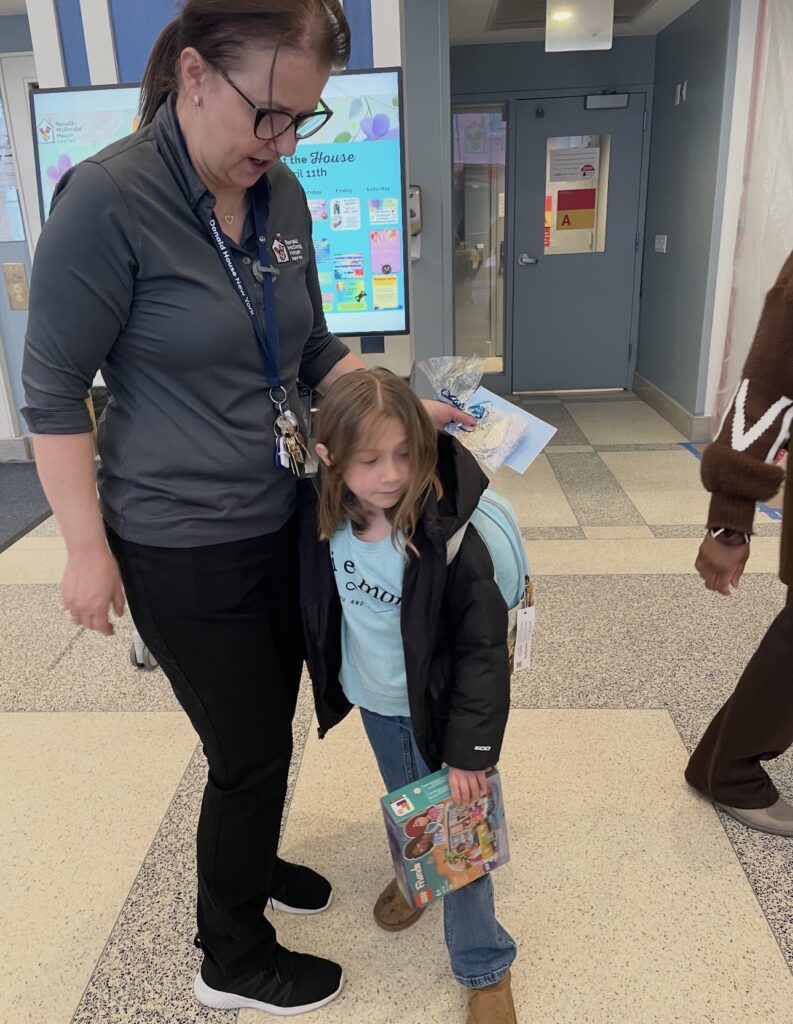
Lilly with Family Support Social Worker Isabella
In April, Sonya and her seven-year-old daughter Lily flew from Columbia, South Carolina, to LaGuardia Airport for Lily’s first appointment at Memorial Sloan Kettering. Lily has a tumor on her spinal cord. It is, for now, benign. But it is fused to her central nervous system in a way that has made full removal too dangerous to attempt. After more than a year of follow-up MRIs and second opinions, Sonya, a single mother who works in corporate real estate, had finally pushed her way into the office of one of the few teams in the country that sees this kind of tumor every week.
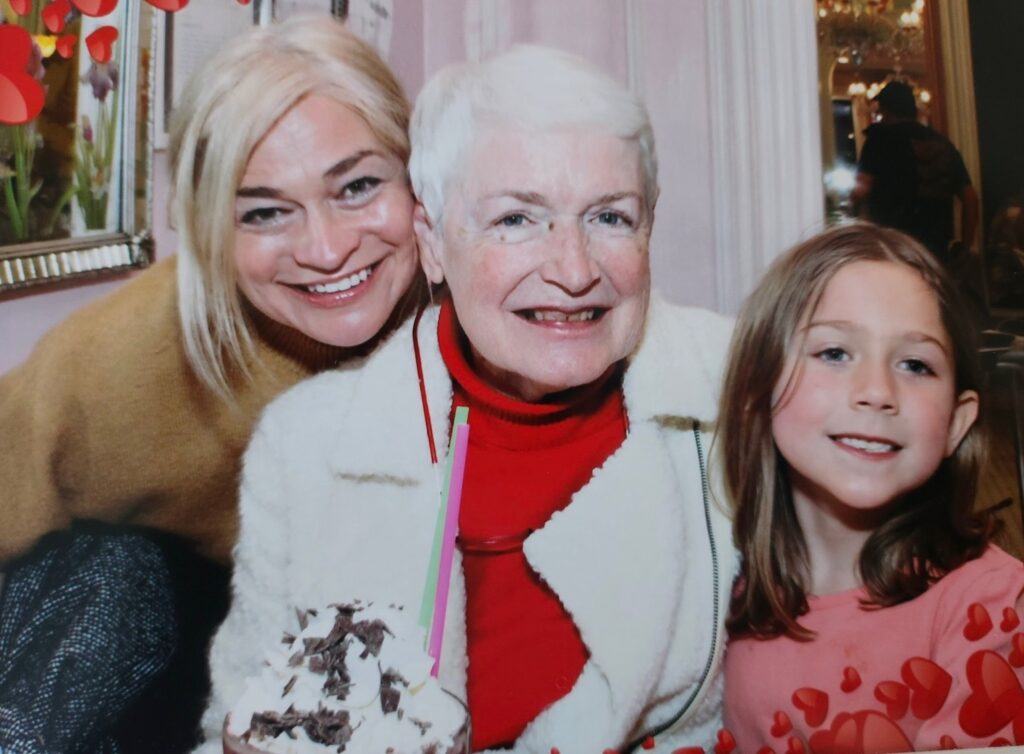
A cab dropped them at the curb on a Saturday. Sonya, Lily, and Lily’s grandmother stepped out with their bags.
They were exhausted. They didn’t know what to expect.
Then Sonya looked up at the awning.
Sonya describes the moment she stepped inside the House as something physical.
“The presence when you walk in was calming. Cheerful. Bright,” she says.
Two staff members were at the front desk that afternoon: Johnny and Sheila. They checked the family in, asked Sonya where they had flown in from, and then Johnny did something Sonya did not expect.
He asked Lily what her favorite color was.
He asked if she liked Needohs, the squishy little collectible toys that every seven-year-old in America seems to want right now.
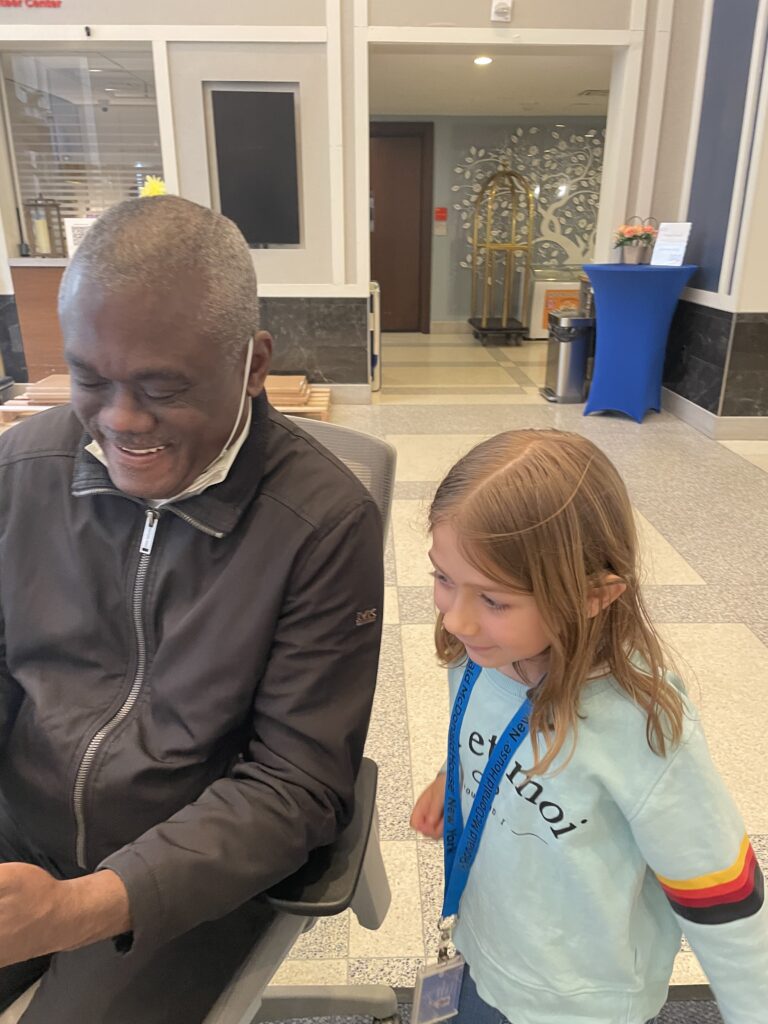
Lilly and Fred, our front desk security staff member
What Johnny didn’t know is that Sonya had spent the night before their flight trying to buy Lilly a specific Needoh — a snowball-shaped one — to give her on the plane. Amazon was sold out. Every site was sold out. Sonya had given up.
Johnny went into a back room and came out with one.
A pink gift bag. A snowball Needoh inside. The same snowball Needoh that was sold out everywhere Sonya had thought to look.
“Is this real?” Sonya remembers thinking.
The first conversation at the front desk is, in many ways, the most consequential one a family will have at the House. Names are checked. Rooms are assigned. A staff member learns the spelling of a child’s name and uses it. Quickly. Correctly. Sometimes, if the moment calls for it, a staff member walks into a back room and finds the one toy a mother was crying over the night before.
The First Signals
The Substance Abuse and Mental Health Services Administration‘s framework on trauma-informed care emphasizes that in moments of acute stress, the first signals a person receives from a new environment — whether they are known, whether they are expected, whether they are safe — shape everything that follows.
For families navigating medical trauma, being seen, welcomed, and recognized is not an added comfort, it is a foundational part of family-centered care.
- – Kaitlin Raybon
For a parent who has spent the last forty-eight hours feeling like a number on a clipboard, being seen at the front desk of RMH-NY is not a courtesy.
It is everything.
The Room
Mom in the Family Support office.
The room is enough. The linens are folded ready to cover the bed. The towels are clean stacked nearby. The window does not look out onto an ICU.
When Sonya walked Lily into their room for the first time, she stopped in the doorway.
“This is so beautiful,” she said. “This is so nice.”
She has spent her career in hospitality. She has worked for hotel brands that pride themselves on five-star training and corporate standards. She knows what good service looks like. She knows what it costs.
And she knew, standing in that room, that this was something else.
What the Body Remembers
When Needhika and Tarak arrived late one evening with their son Nirvan, whose ultra-rare immune condition has been documented in fewer than forty cases worldwide, exhaustion had recalibrated their expectations entirely.
“We only expected a roof over our heads,” Needhika said. “After everything we had been through, our expectations were low.
Needhika and Nirvan are all smiles.
What they found, like Sonya, was something they didn’t have language for yet.
A bed. A lamp. A locked door. A shower that was theirs, and only theirs, for as long as they were here.
The body, after enough days in a hospital, forgets what it feels like to put down a bag and not pick it back up for a few hours.
The first night is the night the body remembers.
The Hallway at 10 pm
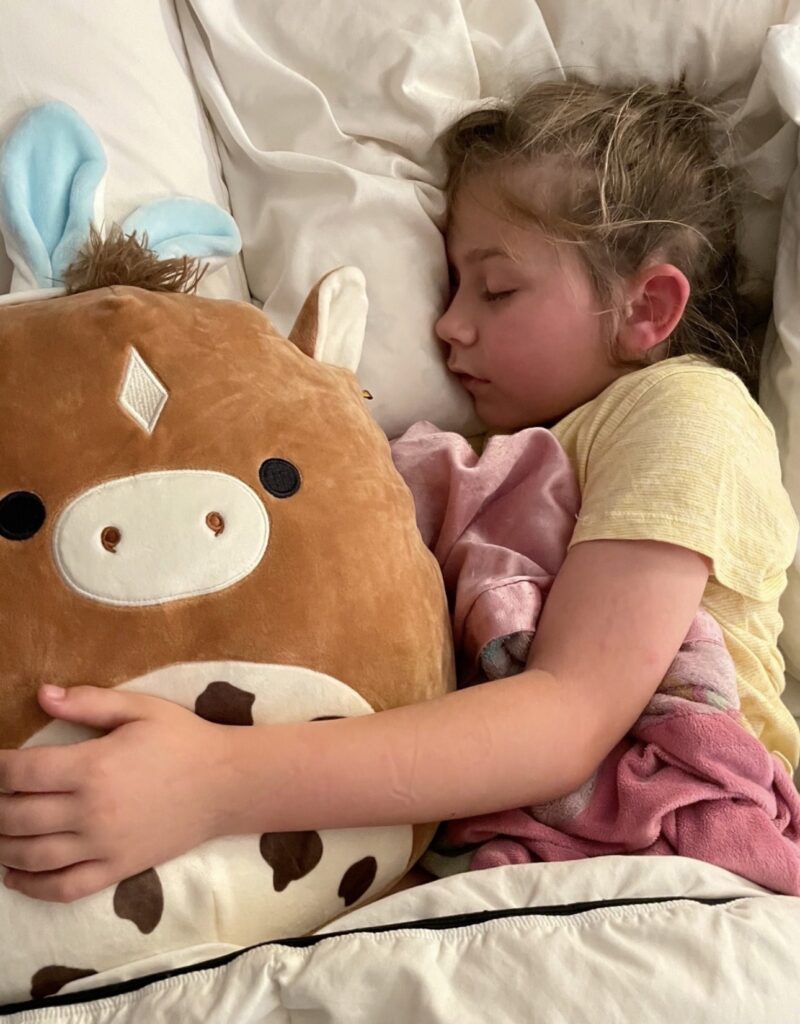
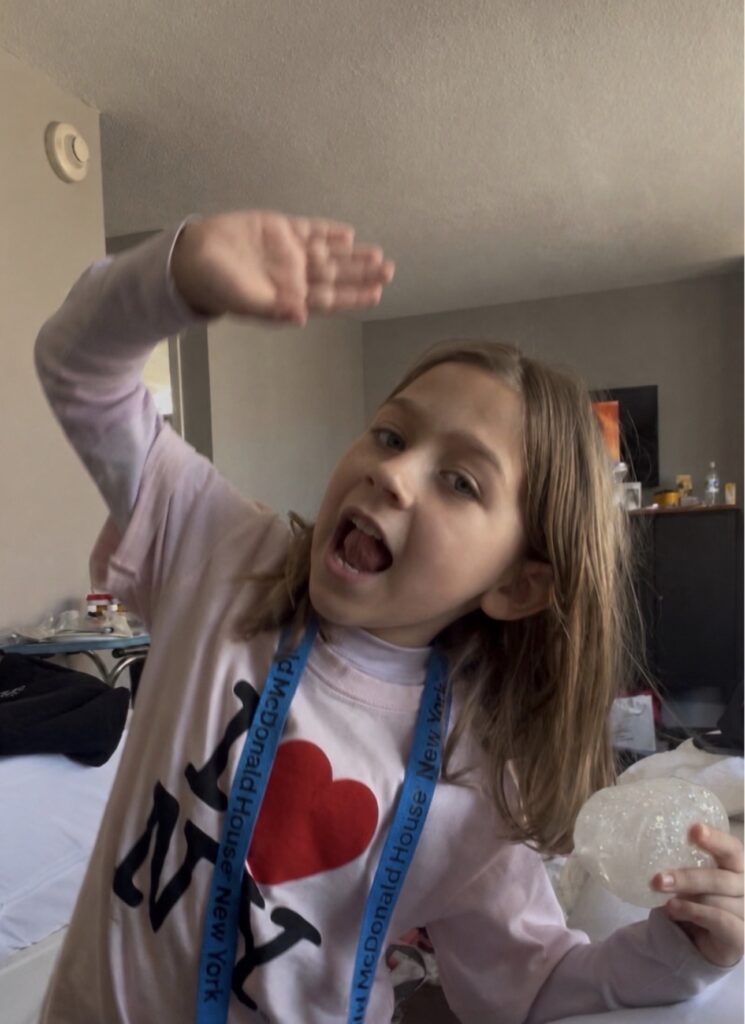
Lilly sleeping with her squishmallow from the House.
The House has a different rhythm at night.
Hallways quiet down. The staff at the front desk pour another coffee. Doors close. Doors open. A father walks to the laundry room at 10:45 AM because he cannot sleep, and the motion of folding his child’s clothing is the closest thing he has to peace.
This is when the House does some of its most important work.
Because caregiver mental health is not abstract. It is the question of whether you can sleep tonight. Whether you can eat in the morning. Whether you will recognize your own face in the bathroom mirror.
Research published by the American Academy of Pediatrics has long recognized that parents of children with serious illness experience elevated rates of clinical anxiety, depression, and post-traumatic stress, often comparable to those of the patients themselves.
The interventions that help are not always clinical. Sometimes they are structural. A safe room. A clean bed. A community of other parents who, by their very presence, communicate the one thing a caregiver needs to hear the most: you are not the only one.
Needhika, who has spent more nights in hospitals than in her own home over the course of Nirvan’s illness, put it this way:
When I come here, I feel like I can breathe again. It’s not just a place to stay. It’s a place that allows me to rest and take care of myself, which is so important when you’re living in constant crisis.
The Morning After
The morning might be what surprises families most.
They wake up — sometimes after the first real sleep in a week, sometimes after no sleep at all — and the world is still there. The diagnosis hasn’t changed. The hospital is still waiting. The child is still sick.
But something has shifted.
For Sonya, the shift happened on the sidewalk.
Memorial Sloan Kettering is a short walk from the House. Every morning of Lily’s appointments, Sonya put on her coat, took Lilly’s hand, and made that walk. Every morning, a staff member at the front door said something to her on the way out. Not always the same words. Not always anything she could quote back later.
But the message, she said, was always the same.
It’s going to be okay. Go ahead. We’re here when you come home. It’s okay.
“I left in peace,” she said.
That is not a thing a parent walking into a cancer center should be able to say.
But it’s what the House does.
Building a Community
For other families, the morning shift comes through other people. Yoselys, Melanie’s mother, was too afraid to talk to anyone for her first several days at the House.
Melanie with friends at RMH-NY
At first it was difficult for us to share or get to know other families because we were afraid,” she said. “Until one day, I exchanged a few words with someone who has grown very special to us, named Edgar. Because of him, we met several other families. It was unforgettable.
By the end of the first morning, most parents have not solved anything. The road ahead is still long. The child is still in treatment. The fear is still real. But something irreplaceable has happened. They have started to breathe again.
What the First Night Is For
Mental Health Awareness Month is full of campaigns about resilience. About self-care. About reaching out.
The first night at RMH-NY does something quieter, and in its own way, more radical.
It reminds a family that they do not have to be resilient tonight. They do not have to perform self-care. They do not have to reach out, because someone has already reached toward them.
Lilly Saying goodbye to Guest Experience Coordinator, Debbie
Sonya said it more plainly than any campaign could.
“You guys gave us a home when we needed a home,” she said. “And we didn’t even know we needed a home.”
Sonya’s statement shows the work the House does before the family even knows how to ask for help.
It is the lamp left on.
It is the dinner kept warm.
It is the staff member who learns to pronounce a child’s name on the first try. And the one who walks into a back room to find a toy a mother thought she had lost.
Together as a Family
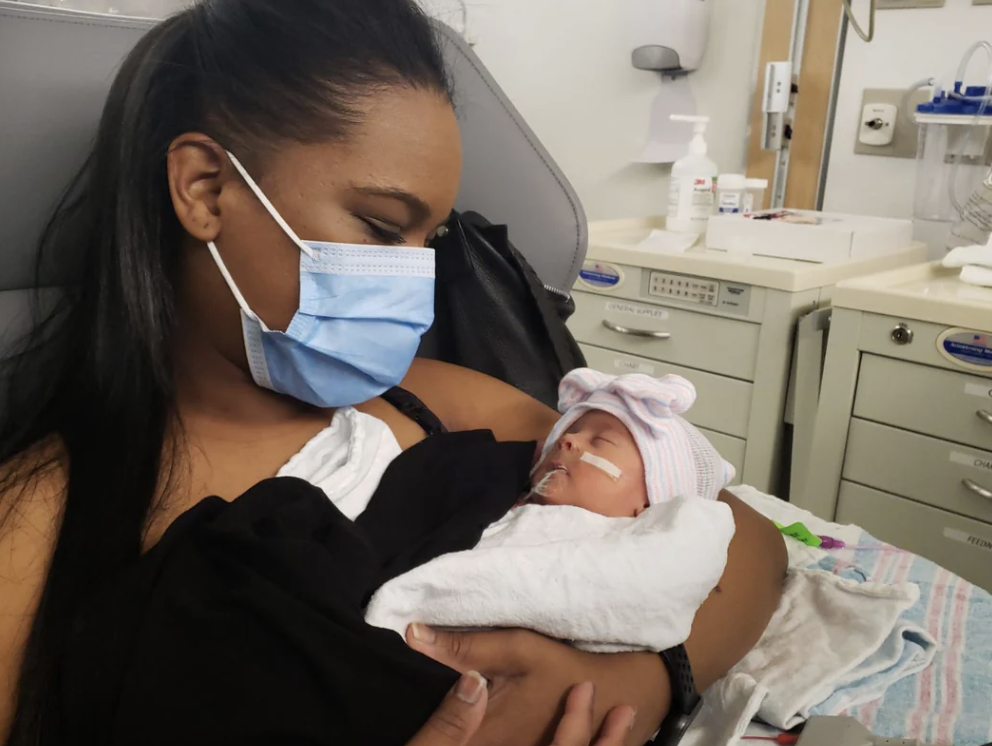
Giselle Morales knows this from both sides of the door. As a social worker at Hospital for Special Surgery, she had referred families to RMH-NY for years. In December 2022, after her own daughter was born at 32 weeks and admitted to the NICU, she became a parent in crisis herself, recovering from a C-section and trying to stay close to a baby fighting to live.
For 32 days, the House was her foundation.
“Everything felt completely out of control except the House,” she said. “The House made it normal.”
A month later, when her daughter Olivia was finally cleared to leave the hospital, Giselle and her husband brought her back to their RMH-NY room.
“That was our first night together,” she said. “It was lovely.”
This is what the House is.
Not just shelter.
A place to begin again.
Help Us Keep the Light On
Tonight, somewhere in the city, a family is on their way to the House for the first time. They are tired. They are scared. They are carrying things that have nothing to do with the bag in their hand.
Your gift turns on the lamp by their bed.
Your gift keeps the front desk staffed at midnight.
Your gift makes sure the first staff member they meet has the time, the training, and the heart to ask a seven-year-old what her favorite color is — and the supply closet to actually do something about the answer.
This May, for Mental Health Awareness Month, help us keep the light on for the family arriving tonight.
None of this is logistics.
It is a moment the family will not remember in the morning, and a feeling they will never be able to forget.
What are the most frequently asked questions about the first night at Ronald McDonald House New York?
Why is the first night at Ronald McDonald House New York so important for family mental health?
For families arriving in crisis, the first night is when stabilization begins. Most have just received a serious pediatric diagnosis, traveled long distances, or come directly from the hospital. The care during those first twelve hours — a prepared room, a name said correctly, a hot meal, a kind word at the door — addresses caregiver mental health before the family knows how to ask for help. Research on trauma-informed care consistently shows that the first signals a person receives in a new environment shape everything that follows.
How does Ronald McDonald House New York support caregiver mental health?
RMH-NY supports caregiver mental health through trauma-informed care, peer community, and the structural basics of rest and proximity to medical care. Staff are trained to recognize signs of acute stress in parents and to respond with empathy from the moment a family arrives. Programs include the Blavatnik Family Foundation Wellness Center, in-house peer support, Social work services, and family-centered programming designed to give caregivers the space to breathe during their child’s medical journey.
What does a family receive on their first night at Ronald McDonald House New York?
A family arriving at RMH-NY receives a private room steps from world-renowned pediatric hospitals, a hot meal, basic supplies, and care from staff trained in trauma-informed care. The House serves families from more than 40 countries each year, with attention to language needs, cultural sensitivity, and proximity to nearby hospitals including Memorial Sloan Kettering, NYU Langone, Hospital for Special Surgery, and New York Presbyterian. There is no cost to the family.
How can I help families staying at Ronald McDonald House New York?
You can support RMH-NY through a one-time or recurring donation, by volunteering, by donating items, or by hosting a fundraiser. Every gift directly supports the cost of housing, meals, and programs for families navigating their child’s serious illness. Visit rmh-newyork.org to give, volunteer, or learn more about the families who call the House their home away from home.
More Stories
-
-
-
-

-
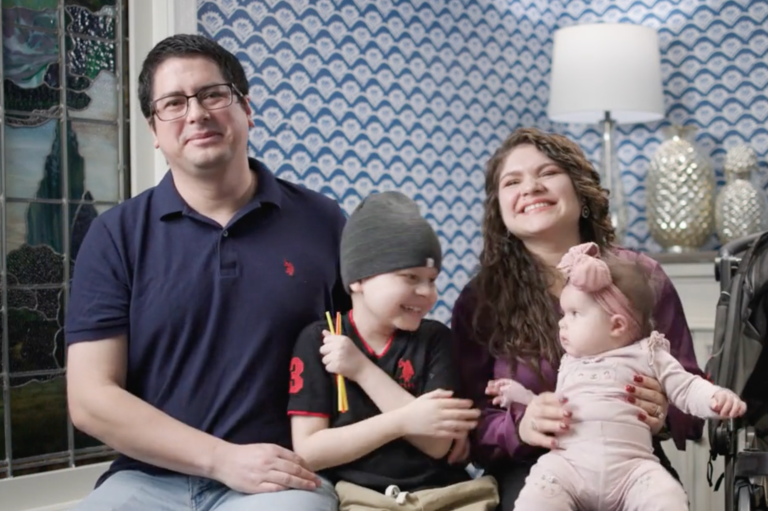
Family
The Boy Who Collects Hats: An RMH-NY Family Story
This is how you identify Santiago in a room. Not by volume. Not by demand. But by the gentle authority of imagination. His hats are not costumes. They are moods. Weather systems. Small declarations of resilience perched carefully on his head.
-
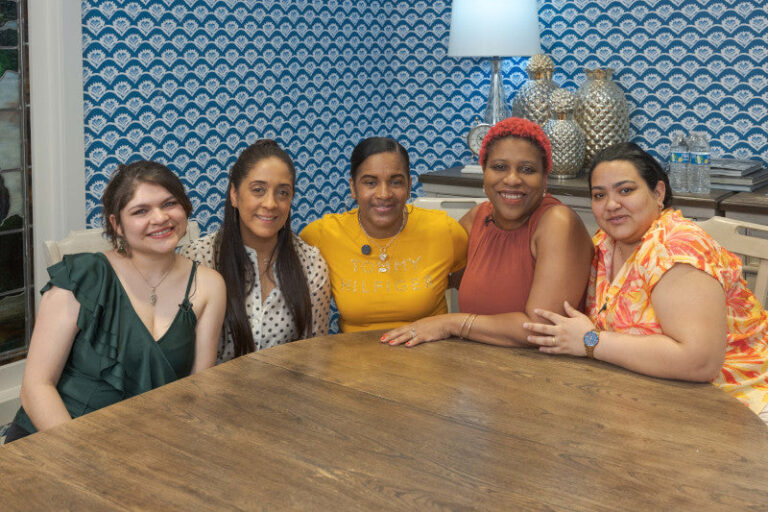
Family
Every Day Is Mother’s Day
This is a story about five mothers who sat down together for one hour and told the truth.
 Family
  Family
  Staff
Staff