
And Then He Grabbed the Mic and Started Singing
Thomas and JoJo’s RMH-NY Story
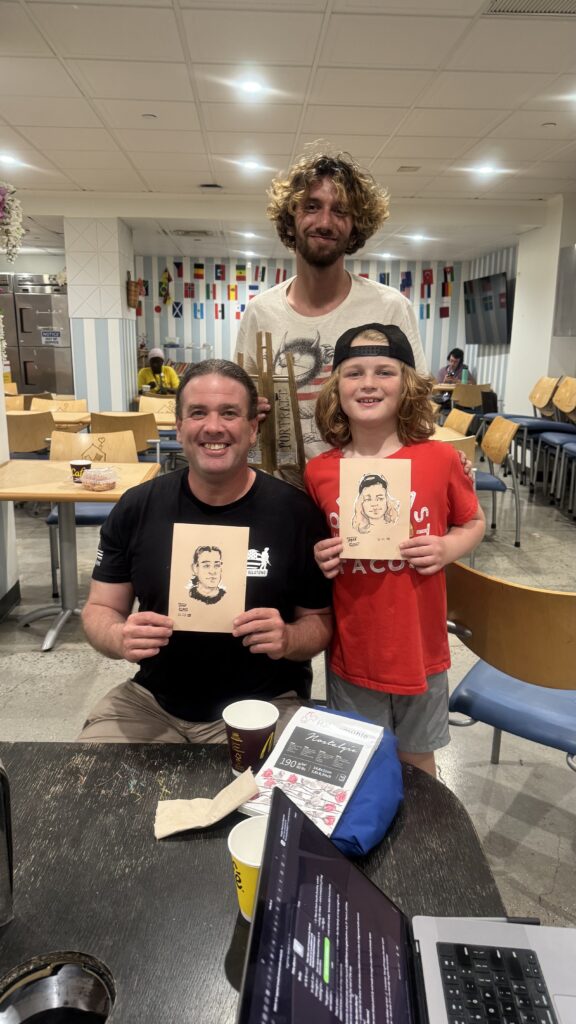
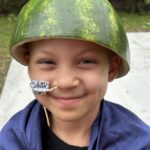
Meet the Travers
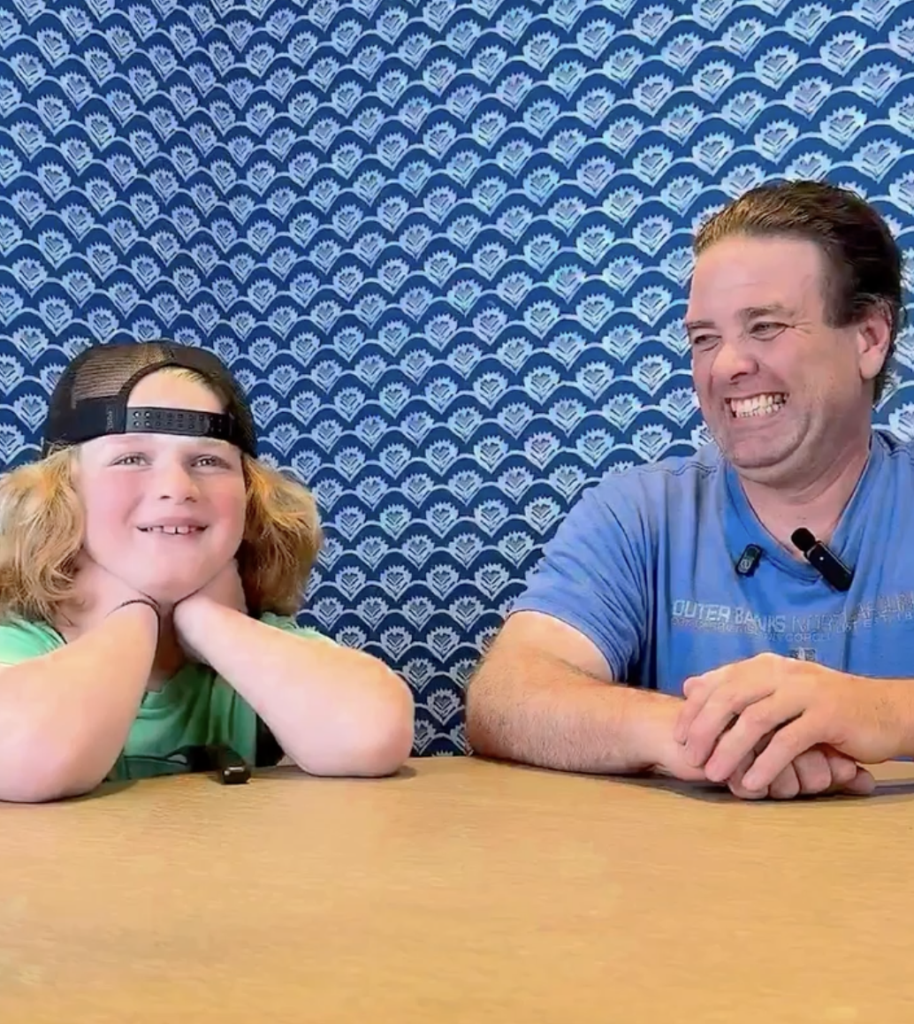
There is a certain kind of confidence that cannot be taught. You either have it or you don’t, and very few of us do. JoJo Travers has it in bulk.
Consider the evidence. He is nine years old. He has just spent eight hours at the hospital—the real kind of hospital day, with needles and waiting rooms and a small body asked to do very serious things. He gets back to the place his family is staying. He is inside for maybe five minutes. And then, without a soundcheck, without an invitation, without any of the formalities a performer might reasonably observe, he finds a microphone in the basement and decides the room needs a concert.
He is the headliner. Nobody asked him to be. That, it turns out, is the whole point.
Thomas Travers is 44 and owns a landscaping business in Haw River, North Carolina, a small town just west of Chapel Hill where he’s lived for thirteen years. He has a landscaper’s hands and a landscaper’s patience, and he spends every spare hour he has with his kids. There are two of them. Nora is eleven. JoJo is nine, the youngest, and when he isn’t at a hospital in New York City, he is home in North Carolina doing exactly what you’d hope a nine-year-old would be doing: playing with the family’s German Shepherds and, one imagines, negotiating the terms of his relationship with his big sister.
That is the life the Travers family is fighting to protect. To understand what they’re up against, you have to go back to something almost impossibly small, and almost impossibly early.
The night everything changed
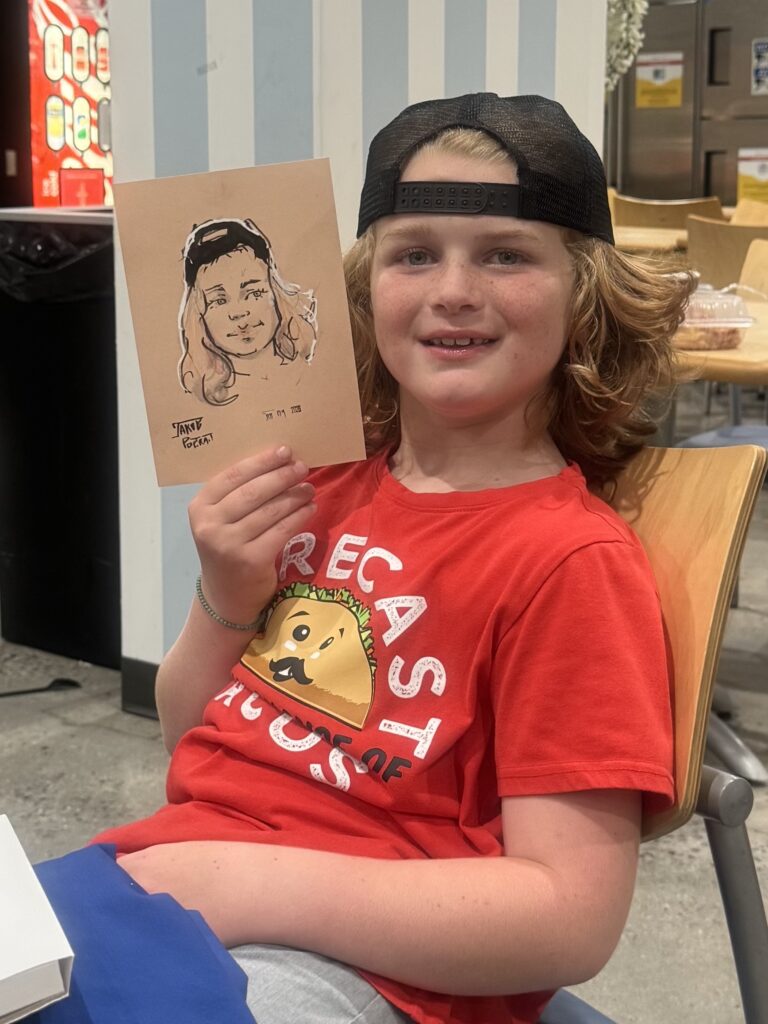
JoJo was 18 months old. There were no warning signs, nothing to catch, nothing to worry over. One night his mother was changing his diaper and felt a mass she couldn’t explain. “There were no symptoms,” Thomas says. “One night we just felt it. That was it.” He credits her with catching it—mama, tuned in—and doctors were stunned the family had found it as early as they did. Before any scan, before any specialist, a mother’s hands knew something was wrong.
What she’d felt was a solid tumor about the size of a softball, growing on JoJo’s adrenal gland. That softball-sized thing inside that 18-month-old was Neuroblastoma, a cancer that attacks a child’s nerve tissue. It’s a word most parents never have to learn.
“Three doctors walked into the room and told us our son had cancer,” Thomas says. “There’s no describing that. It’s just gut-wrenching.”
Surgery removed the tumor in January 2019. For nearly a year, the family began to breathe. Then, that December, it came back. On paper, JoJo’s cancer reads as low risk. In practice, it has behaved the opposite, which is why he now seeks treatment at Memorial Sloan Kettering in New York, one of the few places in the country equipped for exactly this kind of stubborn, rule-breaking disease.
Learning to play a game no one should have to
What no one hands you, alongside the diagnosis, is a manual.
Thomas, a landscaper by trade, had to become a medical navigator overnight. Second opinions. Insurance gray areas. Three doctors offering three different plans, and the crushing responsibility of choosing between them. “You don’t realize how much the doctors advocate for you,” he says, “and everything is expensive. You have to learn how to play the game.” He puts it more plainly elsewhere: “No one’s here to save you.” And the hardest lesson of all, the one that keeps a father awake: “Sometimes the best choice is the most difficult one.”]
Twenty-two rounds of immunotherapy followed, back-to-back, every three weeks. Today JoJo is on a neuroblastoma vaccine trial at MSK—eight injections in all. He’s just finished number seven. Then, comes a full year of monitoring, before they will return to NYC for the final round. It’s a particular kind of waiting that families like the Travers know too well.
Thomas doesn’t pretend to know how the story ends, and he’s honest about it in a way that stops you cold. “I know we’re going to get through it,” he says. “I just don’t know what we’ll look like at the end of it.” It is the voice of a man who has decided to keep walking forward without the comfort of knowing what’s waiting on the other side.
The treatment brings them to New York about a week at a time. For JoJo, the hardest part of that week isn’t the needles or the hospital time. It’s the distance. Asked how it feels to be away from his mom and Nora, he doesn’t reach for anything complicated. “I don’t like it,” he says. Four words. They land like stones.
More than a place to sleep
Ronald McDonald House New York is not, in the end, a hotel. It gives families of seriously ill children a place to stay at no-cost near the city’s hospitals, along with breakfast bags to take with them in the morning and two full meals a day, a wellness center with a great view and good coffee, and a community of other families fighting the same fight. For Thomas and JoJo, though, it turned out to be less a place to sleep and more of a place to not feel so alone.
“What really pulled us into the House was hearing other families talk about the community,” Thomas says. “That’s what the House provides—community. It keeps you from feeling so alone.”
In a waiting room, that community stops being abstract. “There’s nothing better than walking into the hospital and seeing three families in the waiting room you know from the House,” he says. “You don’t feel like you’re on an island.”
The families come from everywhere. Poland. South America. All over the world, all under one roof, all fighting some version of the same fight. Some are new and frightened. Some have been at it long enough to become, in Thomas’s words, families “who are more seasoned and weathered — people who hold the lamp post on the road and show you which way to go.”
“This place humbles you,” he says.
The small mercies that add up
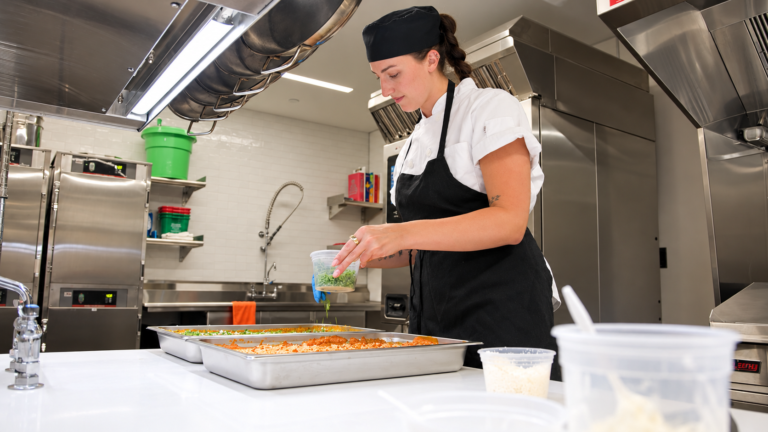
It also feeds you. Two meals a day, warm and consistent, which in a city this expensive is no small thing. “It fills the void, and it’s something warm,” Thomas says. “You can’t ask for much more than that in the city.” For the record, JoJo’s review of the menu is more concise. His favorite House food is pasta. He would like you to know this is the correct choice.
Beyond the meals, the House is full of things a family doesn’t know to ask for until they arrive. Goodie bags waiting in the room, with toothpaste and shampoo and a bookmark and an eye mask, a quiet way of saying *we’re glad you’re here. * An eleventh-floor wellness center with leg compression Thomas never knew he needed and now can’t imagine going without. Two donated grand pianos, one of them older and a little twangy, which is the one Thomas likes best. Remote-control cars tearing down hallways. A lower level that, on the right night, becomes a dance floor.
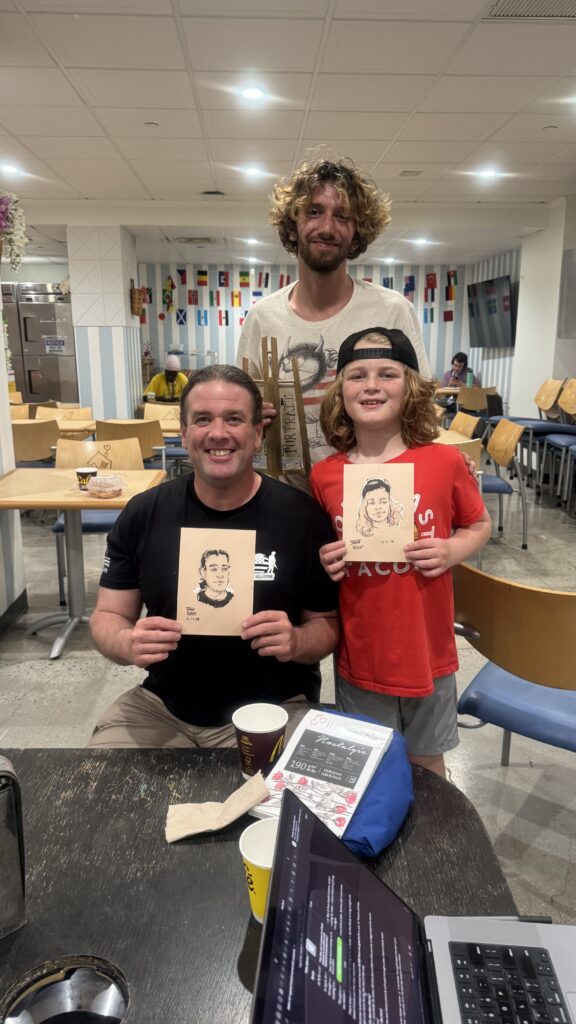
And there are people. Peter at the front desk, who greets everyone who walks in with the exact same warmth. Jillian, who runs the wellness program. Angelica, who manages the wellness center. “Grateful for those people,” Thomas says. “Their energy.” None of them are famous. All of them are the reason the place feels human.
Outside the doors, two blocks hold an entire life. Café Luca. The pizza place. The corner coffee shop at 7 a.m., where a father and son can sit and “watch the city wake up.” A neighborhood that, somewhere along the way, quietly adopted them.
Then there was the parade
After a brutal Thanksgiving-Eve hospital day, the kind that empties you out, the House arranged a police-escort van and drove the family straight to the front of the Macy’s Thanksgiving Day Parade. Behind the barricades. Past the crowd. Snoopy overhead, Smokey the Bear, thousands of people, Central Park at the edge of it all. A rural family from North Carolina, set down in the middle of one of New York’s great spectacles, on a week that had every right to be one of their worst.
Keeping a caregiver upright
The House understands something that’s easy to miss: a caregiver running on empty is no good to anyone, least of all a nine-year-old. “Energy is a big thing,” Thomas says. “Try to stay positive because it’s not easy.” The Blavatnik Family Foundation Wellness Center is part of that.
Breaking for Wellness
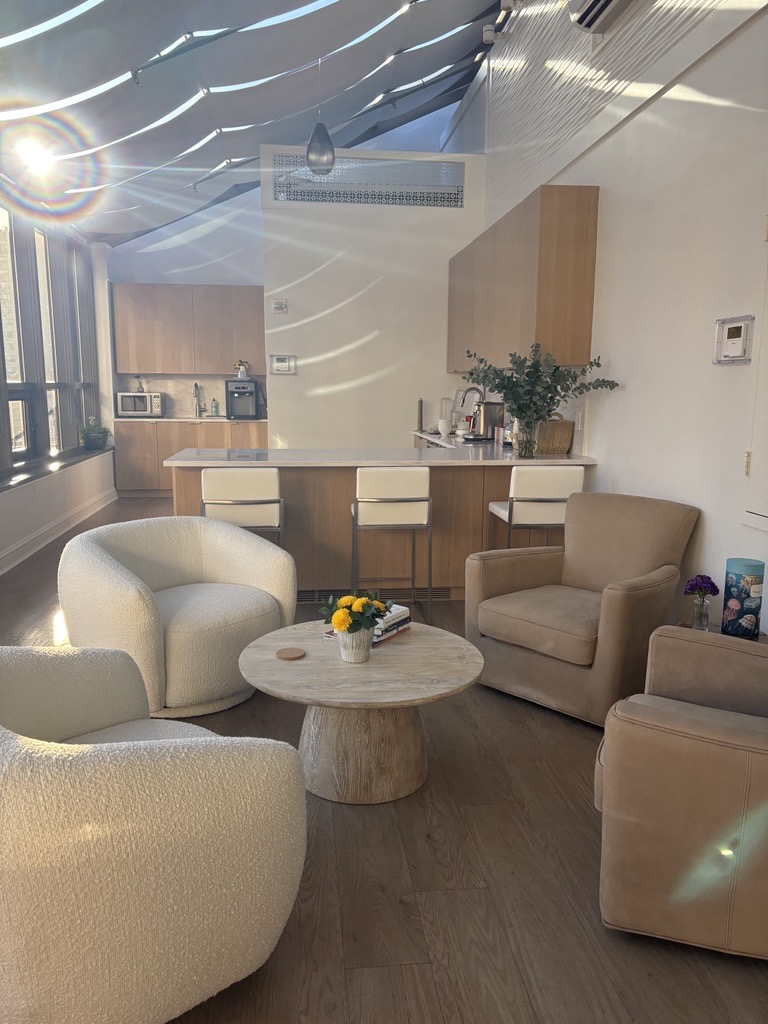
In The Wellness Center, newly renovated and up on the 11th floor (top floor) of the House, the views of NYC’s Upper East Side are prominent and breathtaking, The redesigned space provides a weekly slate of activities and classes solely focused on the caregiver. It provides a haven for caregivers to rejuvenate or simply take a rest from the constant and necessary state of vigilance that comes with having a child in treatment for pediatric illness. If caregivers want a quick workout, a free massage, a perfect morning cup of joe, or a relaxing class targeting caregiver mental health and taught by amazing volunteer wellness professionals from around NYC, The Wellness Center is that one-stop shop.
How to Handle the Big City by Thomas
So, on the hard nights, is the plain grace of quiet. Thomas has been in and out of this city long enough to sleep with earplugs, and he’ll tell you there’s a strategy to it. Sometimes you take away a sense on purpose. Sometimes that’s how you keep going.
That is what the House really does. It doesn’t cure anything. It can’t. What it does is give a family enough steadiness, enough warmth, enough belonging, that they can keep choosing the hard-but-right path one more day. And then one more after that.
And so, this tale leads us right back to the lower level and that pop-up karaoke dance party JoJo joined.
Full circle for JoJo and Thomas
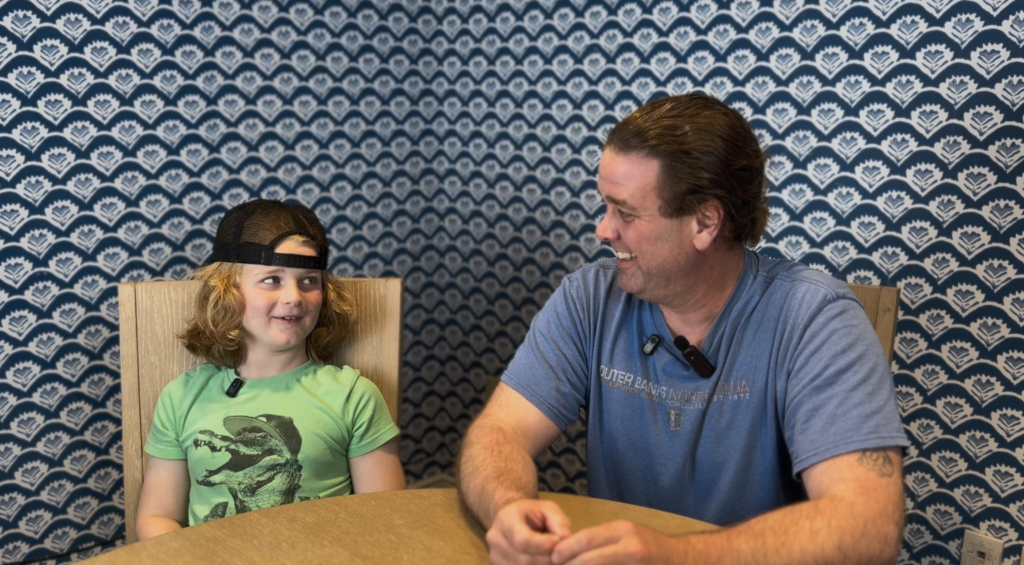
Now, you know what those eight hours at the hospital were like. Now, you know about the softball-sized tumor, the three doctors with three different choices, the twenty-two rounds of chemo, the miles between a hospital bed and a German Shepherd waiting back home. Now you know that when JoJo Travers walked into that Play Space, five minutes off a full day of cancer treatment, and reached for that microphone, he was not doing something small.
He was refusing to let the hard day win. And the House provided the space to let him.
How you can help keep the light on
The House runs on people who will never personally meet the JoJo and Thomas, but it exists because they give.
Thomas knows it. He said as much, straight to the camera, straight to the RMH-NY donor, straight to you. “I don’t think you know what it means to us as parents,” he said, “to take away the burden of where we’re going to sleep when we come to this big city.” A gift to Ronald McDonald House New York is not an abstraction. It is a warm meal after an eight-hour appointment. It is a familiar face in a waiting room. It is a nine-year-old with a microphone, on the worst kind of day, deciding to sing anyway.
“I don’t know if it gets easier,” Thomas says. “You just learn to cope with it better.” And then, when you have weathered enough of it, you turn around and hold the lamp post for the next family coming up the road, scared and far from home and not yet sure they’ll be okay.
The House is how they find their way. Your gift keeps the light on. Donate today.
JoJo, for his part, kept his own thank-you short. One word, for everyone who makes the House run.
“Thank you.”
We’ll let him have the last word. He earned it.
 Family

 Newsletter
 Family